





During the Vietnam War, U.S. Army Special Forces—better known as the Green Berets—formed a close military alliance with the Montagnards, the Indigenous peoples of Vietnam’s Central Highlands. Together, they established Civilian Irregular Defense Group (CIDG) camps, defended remote villages, gathered intelligence and monitored Viet Cong and North Vietnamese infiltration routes.
Travel through Vietnam’s Central Highlands today and you will pass through landscapes that once formed one of the most secret and dangerous frontiers of the Vietnam War. Hidden among mist-covered mountains, dense jungle, and remote tribal villages, an elite force of American soldiers forged an unlikely alliance with the indigenous peoples of the highlands. They were the Green Berets.
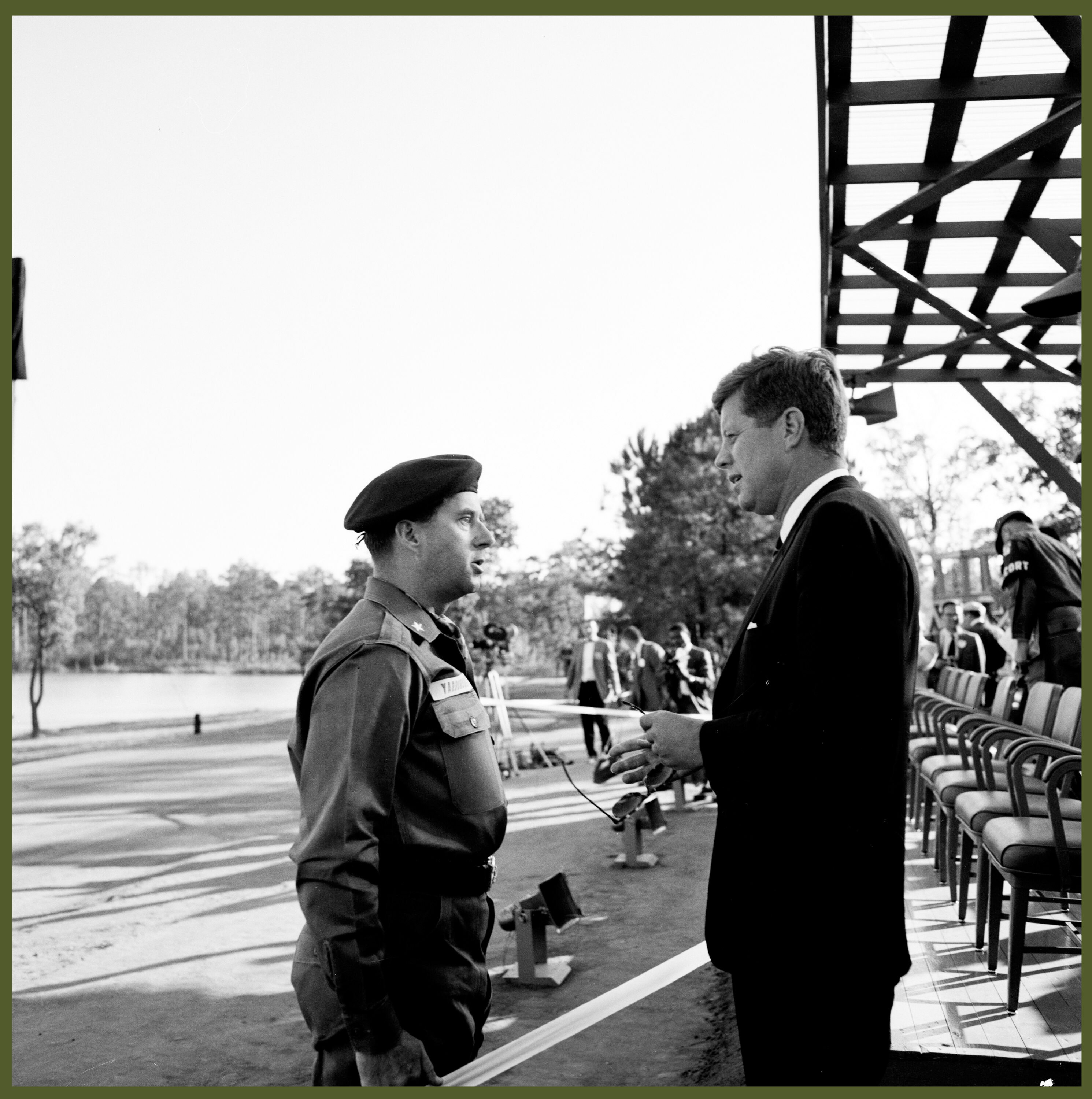
President John F. Kennedy visits 82nd Airborne Division at Fort Bragg, North Carolina to meet Brigadier General William P. Yarborough. Fort Bragg served as the historic home base and headquarters for the U.S. Army's elite Green Berets (Special Forces). (Credit / source JFK Library)
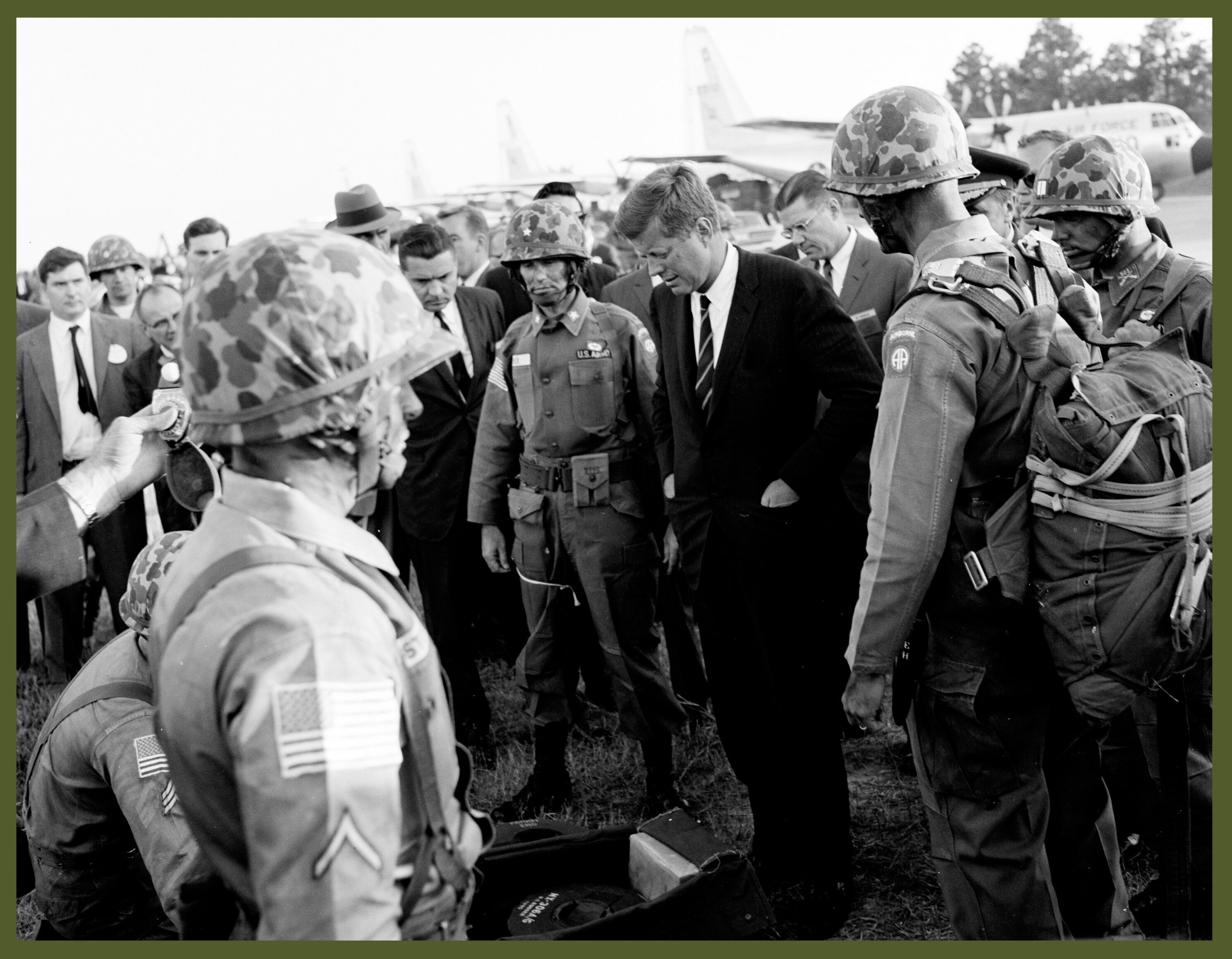
In April 1961, at the height of Cold War tensions, President John F. Kennedy dispatched 400 Special Forces soldiers to South Vietnam. Kennedy viewed these men as the future of modern warfare. Unlike conventional troops, the Green Berets specialized in unconventional conflicts—counterinsurgency, guerrilla warfare, intelligence gathering, and working alongside local populations.
“The Green Beret is a symbol of excellence, a badge of courage, a mark of distinction,” Kennedy declared in 1962.
The Special Forces themselves were a relatively new creation. Formed in 1952, they recruited only volunteers capable of surviving some of the military’s toughest selection and training programs. Candidates endured weeks of punishing navigation exercises, reconnaissance patrols, raids, ambushes, and survival tests before learning specialized skills in weapons, communications, medicine, engineering, and intelligence. Their final lesson was perhaps the most important for Vietnam: the art of guerrilla warfare.
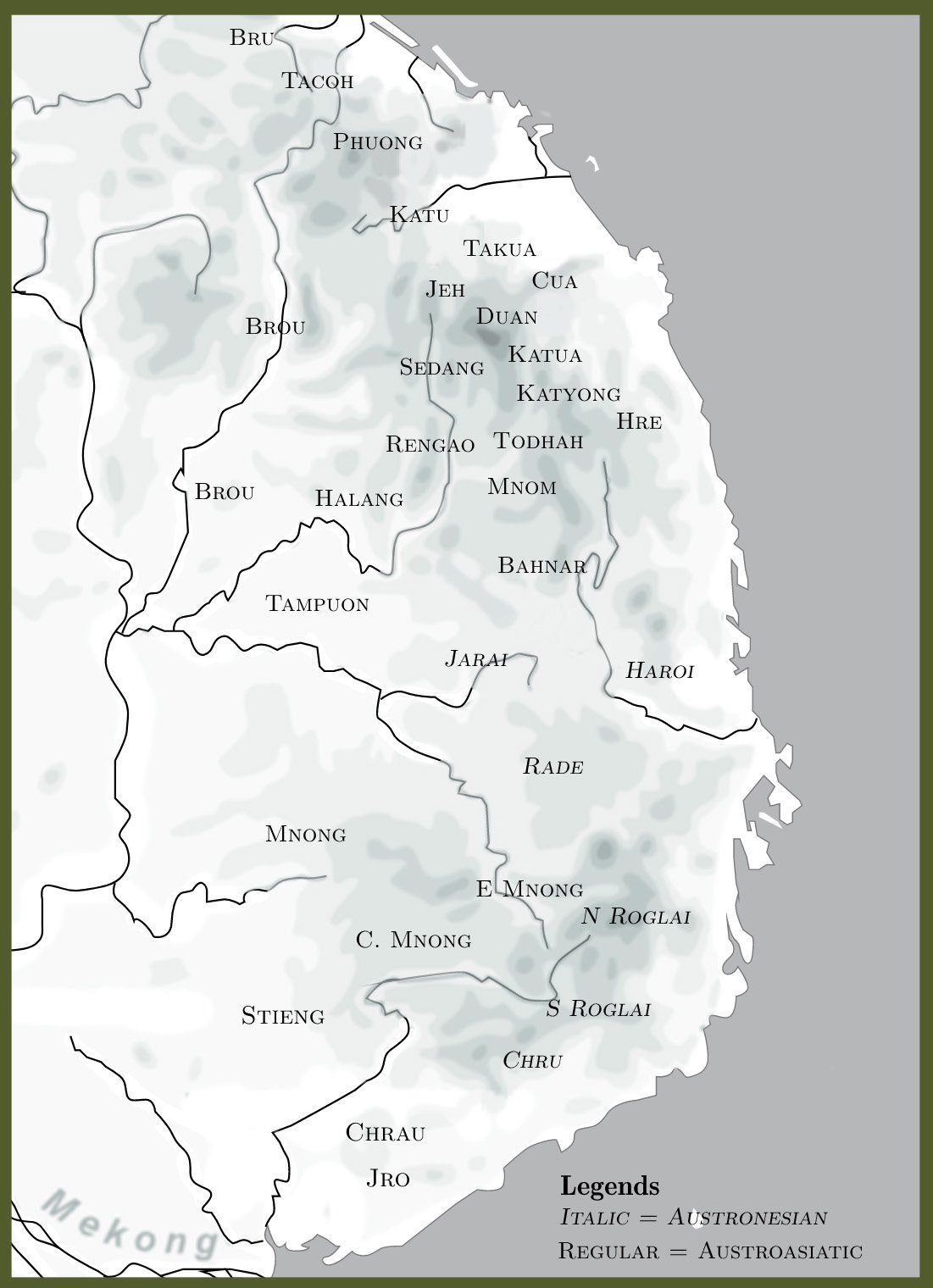
Distribution of ethno-linguistic groups in the Central Highlands of Vietnam (Credit / source wikipedia)
Green Berets Enter Vietnam’s Central Highlands
The Green Berets were sent into one of South Vietnam’s most remote regions—the Central Highlands, home to dozens of indigenous tribes collectively known as the Montagnards.
For centuries, these highland peoples had lived apart from the ethnic Vietnamese who dominated the lowlands. Long viewed with suspicion and discrimination, the Montagnards had sided with the French during the First Indochina War in hopes of gaining greater autonomy. Those hopes were never fulfilled.
As communist insurgents expanded their influence throughout South Vietnam, both Hanoi and Washington recognized the strategic importance of the Highlands. Whoever controlled the mountains could monitor the jungle routes that eventually became known as the Ho Chi Minh Trail.
The CIA proposed recruiting the Montagnards as allies, and the Green Berets were tasked with making it happen.
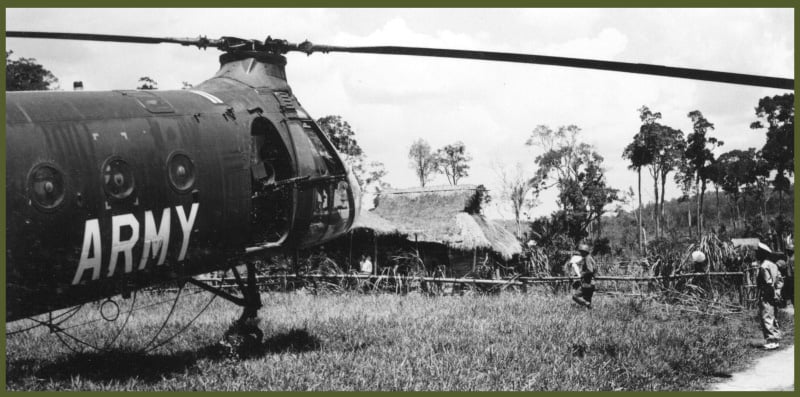
A United States Army Piasecki H-21 helicopter nose and front rotor in the foreground with a Montagnard thatch roofed structure behind it near Ben Methout, Vietnam.
How the Green Berets Built Trust With the Montagnards
The first challenge was not military—it was cultural.
Many Montagnard villages had little contact with outsiders and viewed both the South Vietnamese government and foreign soldiers with deep suspicion. Green Beret teams spent months living among the tribes, learning local customs, providing medical care, and gradually earning trust.
One of the first experiments took place in the Rhade village of Buon Enao in 1961. After weeks of negotiations with village elders, the tribe agreed to cooperate with American advisers. In February 1962, a Green Beret team arrived to train local defenders.
The program became known as the Civilian Irregular Defense Group, or CIDG.
What began as a single village project rapidly expanded. By the summer of 1962, Green Beret teams were operating across the Highlands, establishing camps and training thousands of Montagnard fighters.
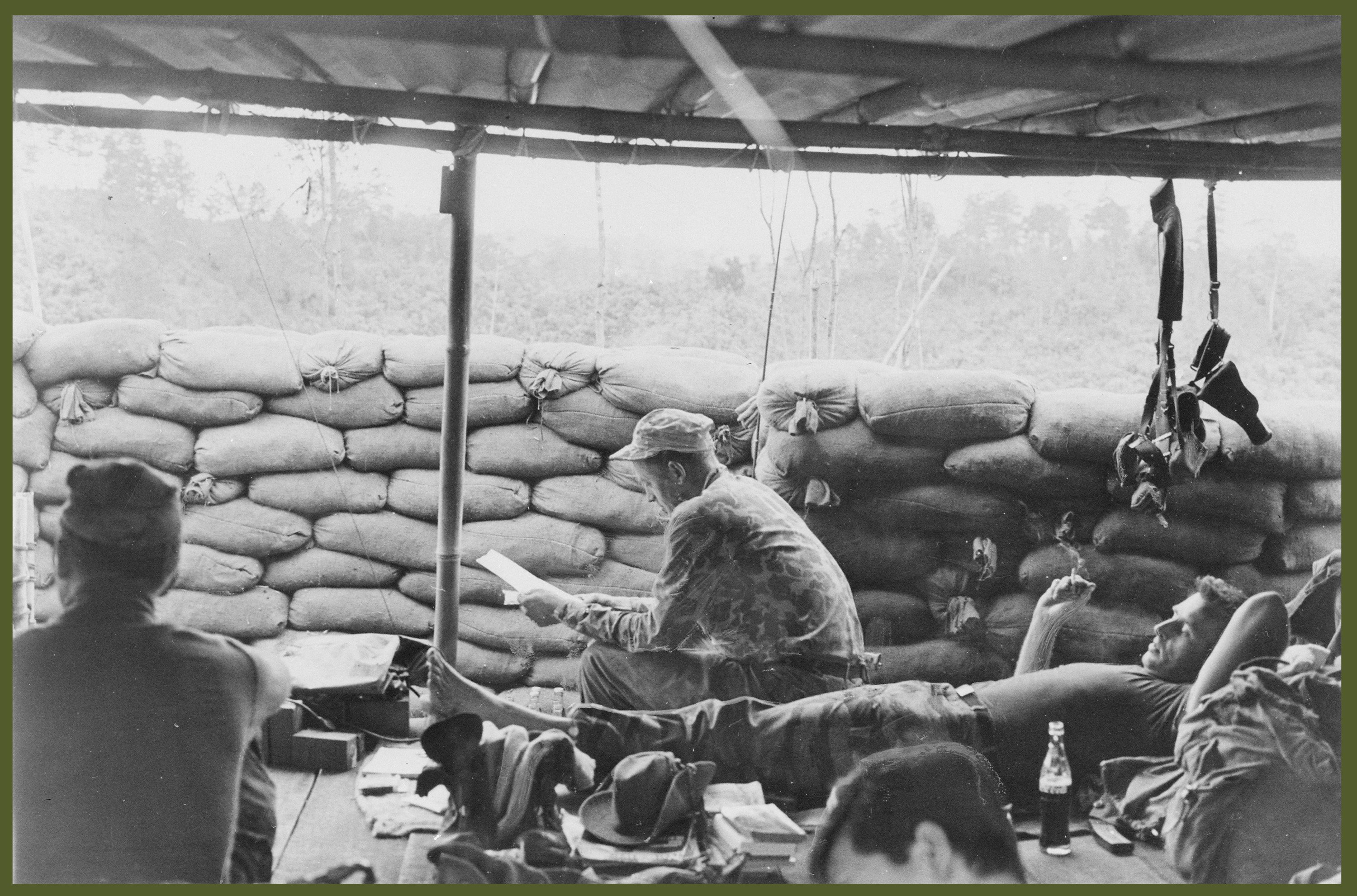
Staff Sergeant Howard Stevens, a Special Forces advisor to a Montagnard strike force, gets a chance to read his mail at Phey-Shuron, a camp built in the central Vietnam highlands. Stevens is part of a 12-man team making soldiers of primitive Koho tribesmen in the jungle mountains west of Dalat.
Green Berets, Montagnards and the Ho Chi Minh Trail
Many of these camps occupied locations that remain famous today among Vietnam War historians.
Khe Sanh opened in July 1962 in the territory of the Bru people. Dak To and Dak Pek followed shortly afterward in the lands of the Sedang tribe. These isolated outposts stood near infiltration routes used by North Vietnamese forces moving men and supplies through Laos and into South Vietnam.
From these camps, specially trained Montagnard scouts—known as “trail watchers”—patrolled the jungle frontier. Their mission was to observe enemy movements, gather intelligence, and report activity along the hidden supply routes feeding the communist war effort.
The work was dangerous and often conducted deep inside hostile territory.
The Green Berets also launched rescue operations to recover Montagnards captured by the Viet Cong and forced to serve as laborers and porters along jungle supply lines.
A Montagnard tribesman during training in 1962 (Credit / source wikipedia)
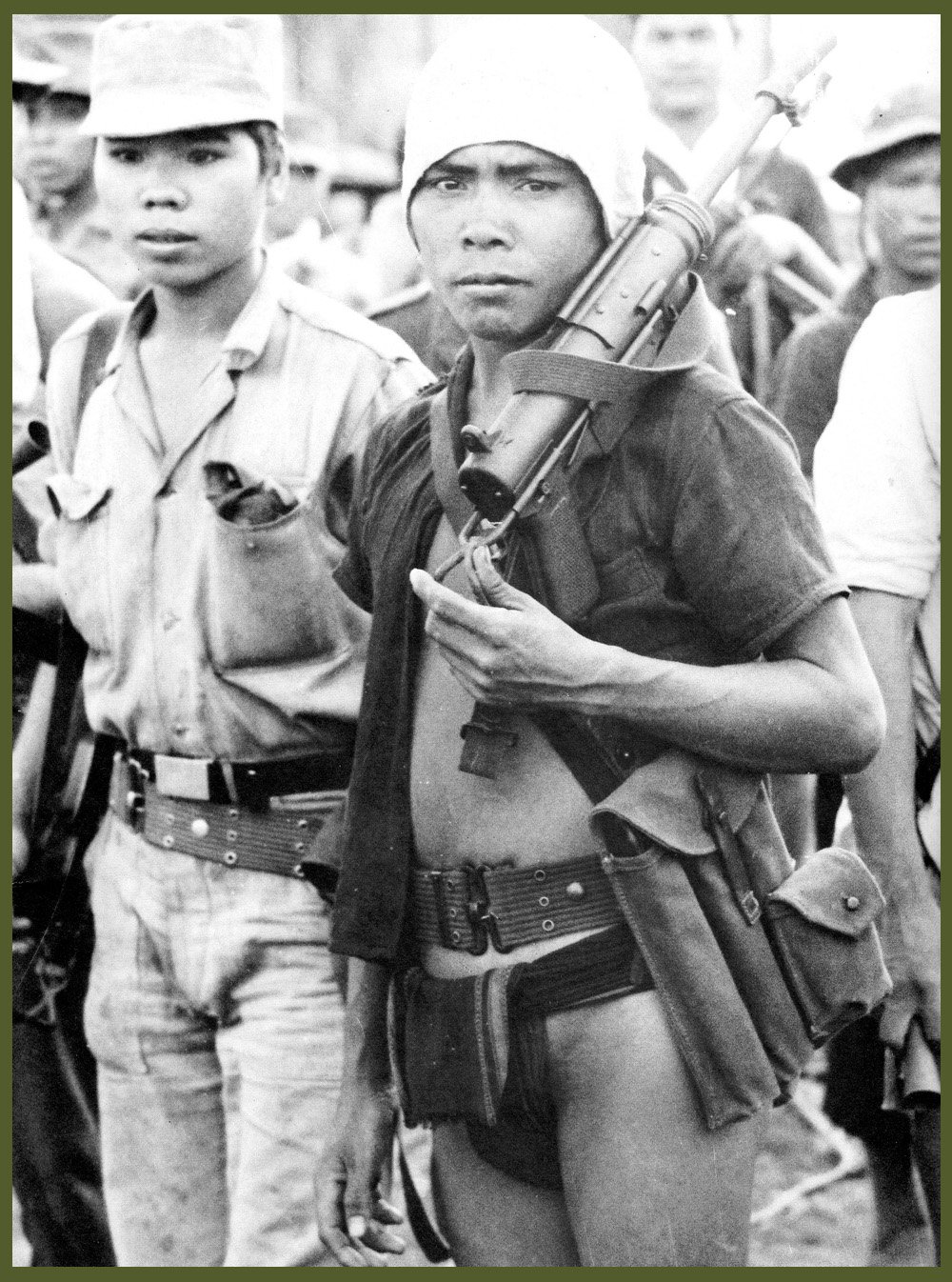
Montagnard Fighters in the Vietnam War
The Montagnards quickly gained a reputation for courage.
In June 1962, defenders from a Sedang village successfully fought off a Viet Cong attack armed with little more than knives, bows, and arrows. Their determination impressed even hardened Special Forces veterans.
Yet the war exacted a terrible price.
Of the roughly one million Montagnards living in South Vietnam before the conflict, an estimated quarter perished during the war. Entire communities found themselves trapped between competing armies.
One of the most tragic examples occurred during the 1968 siege of Lang Vei, near Khe Sanh. Around half of the 900 Montagnards defending the Special Forces camp were killed in the fighting.
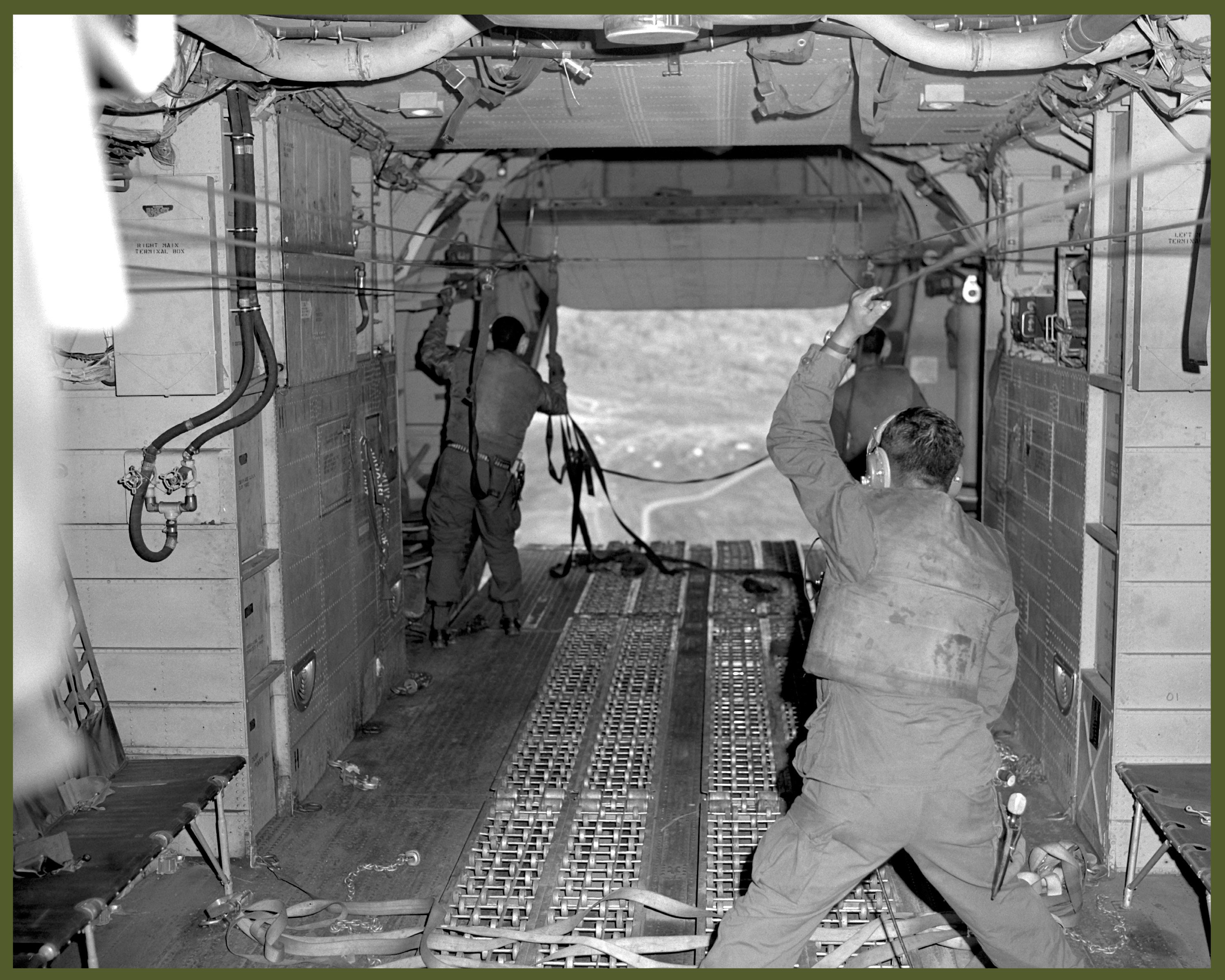
Three members of the 311th Air Commando Squadron, PHAN Rang Air Base, watch as the cargo which they have just parachuted from their C-123 Provider aircraft, floats down to the Marine defenders of embattled Khe Sanh. Airdrops such as this have become almost daily affairs since the enemy began its big push in the area.
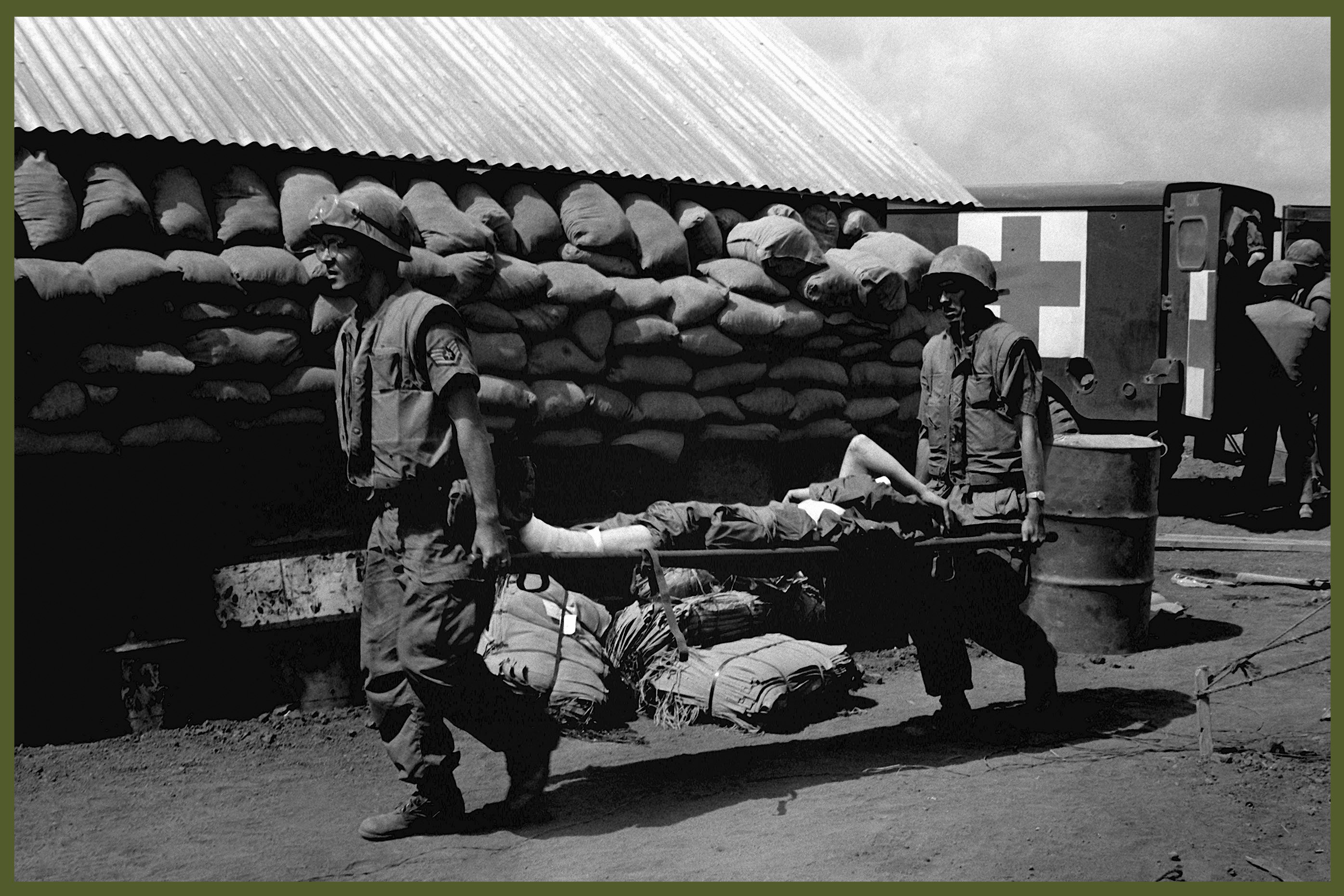
U.S. Air Force medical personnel, on detached duty from Da Nang Air Base, move a Marine casualty from the aid station at embattled Khe Sanh to a waiting C-130 Hercules aircraft for the flight to medical facilities at the base. Wounded personnel can be transported from the field to completely equipped hospitals in less than an hour
How the Green Berets’ Mission Expanded in Vietnam
As the conflict intensified, the Green Berets expanded far beyond village defense programs.
Kennedy authorized clandestine operations directed against North Vietnam, while Special Forces camps multiplied along South Vietnam’s borders. Their mission increasingly focused on reconnaissance, intelligence gathering, and disrupting enemy infiltration routes.
The insurgents took notice.
In January 1963, the border camp at Plei Mrong became the first Special Forces camp attacked by the Viet Cong. It would not be the last.
By late 1964, forty-four Green Beret A-Teams operated throughout South Vietnam, twenty-eight of them stationed near the borders with Laos and North Vietnam. Their camps formed a chain of isolated outposts stretching across some of the war’s most contested terrain.
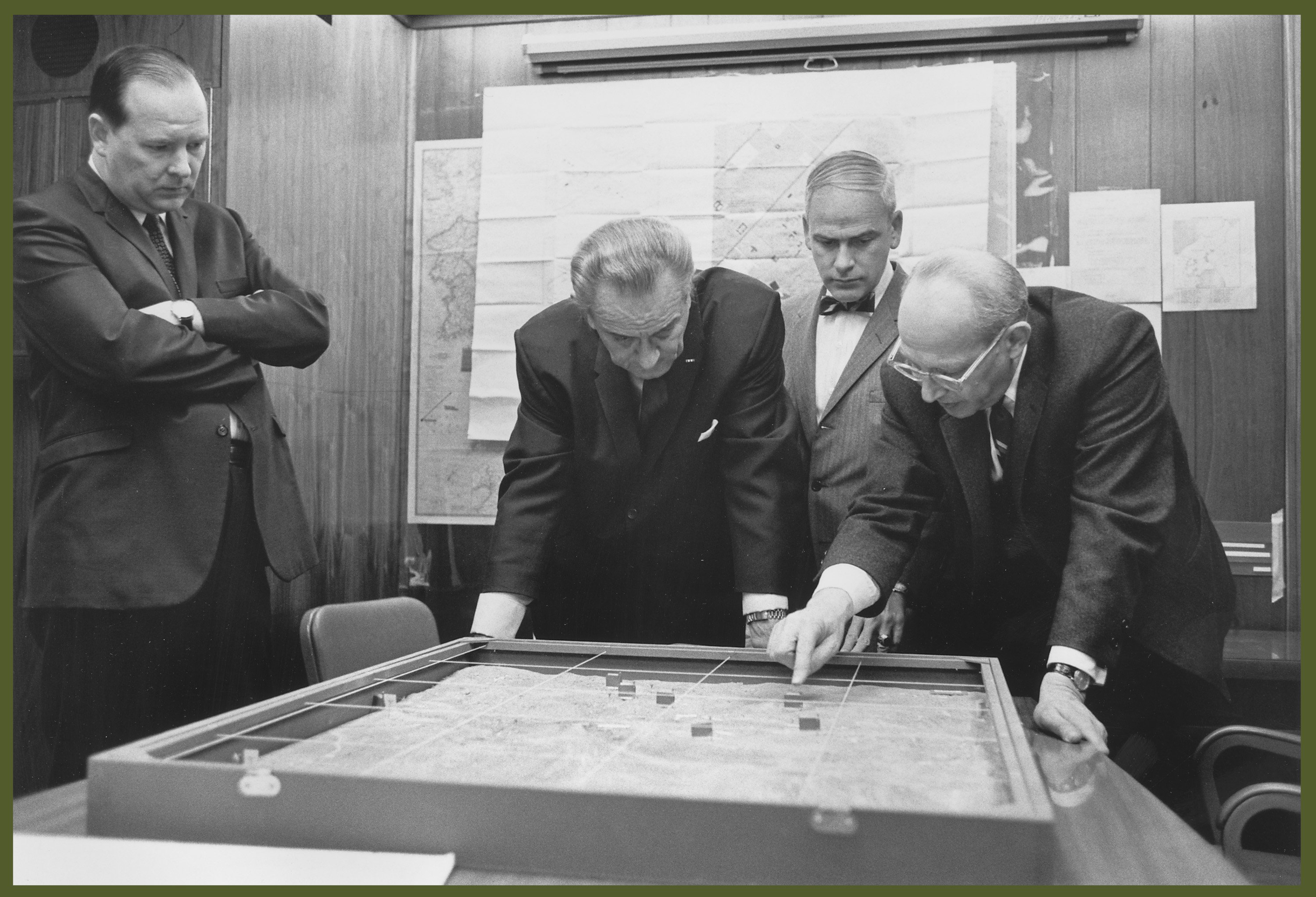
Situation Room: Walt Rostow shows President Lyndon B. Johnson a model of the Khe Sanh area.
The Legacy of the Green Berets and Montagnards in Vietnam
As the war evolved, the Green Berets gradually handed responsibility for the CIDG program to the South Vietnamese Army and shifted their focus toward reconnaissance and intelligence missions, including support for the CIA’s controversial Phoenix Program.
Special Forces combat operations officially ended in March 1971, though advisers remained for some time afterward.
Today, many former Green Beret camps have vanished beneath jungle growth or modern development. Yet travelers of Vietnam American Heroes exploring the Central Highlands can still visit places such as Khe Sanh, Dak To, and Buon Ma Thuot, where the legacy of this extraordinary partnership between American Special Forces and the Montagnard tribes remains woven into the landscape.
It is a story not only of war, but of alliances forged in some of the most remote and rugged corners of Vietnam—a chapter where mountain tribes and elite soldiers found themselves fighting side by side on one of the Cold War’s most secret frontiers.
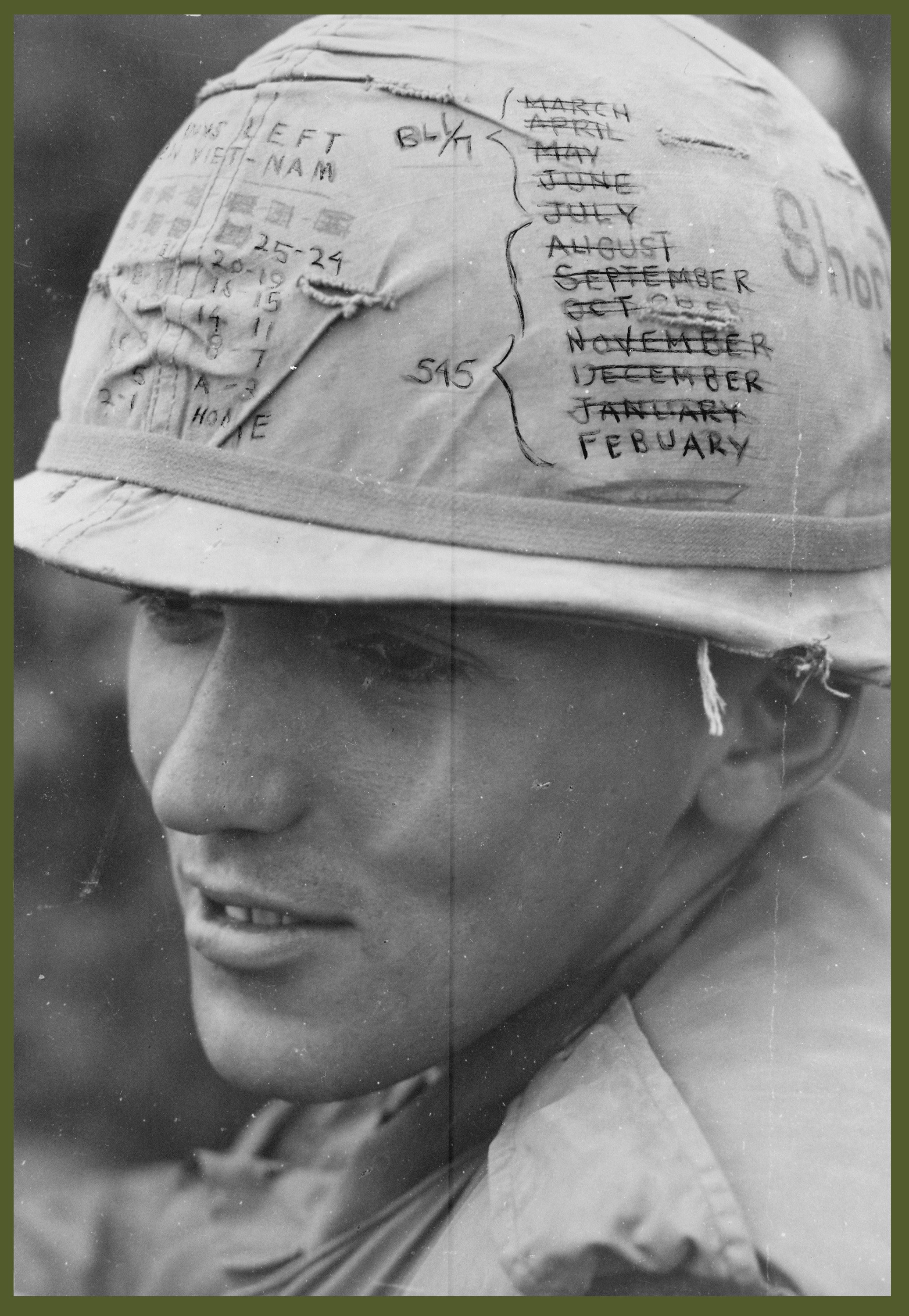
A Sky Trooper from the 1st Cavalry Division (Airmobile) keeps track of the time he has left on his "short time" helmet - says it all!