





The Buddhist Crisis of 1963 was a period of political and religious unrest in South Vietnam that helped bring down President Ngo Dinh Diem’s government.
Beginning with protests over religious discrimination and culminating in Buddhist monk Thich Quang Duc’s famous self-immolation and government raids on Buddhist pagodas, the crisis became a turning point in the Vietnam War.
For centuries, Buddhism had shaped the spiritual life of Vietnam. Introduced as early as the second century, it survived dynastic struggles, foreign invasions, and changing rulers. Yet by the early 1960s, in the divided nation of South Vietnam, the ancient faith found itself at the center of a political storm that would help bring down a government and alter the course of the Vietnam War.
The roots of the crisis stretched back to the French colonial era. During their rule of Indochina, the French favored Christianity and viewed Buddhism with suspicion. Laws were introduced to limit Buddhist influence and expansion. When Ngo Dinh Diem, a devout Catholic, became president of South Vietnam, he chose to preserve many of these discriminatory policies.
President Ngo Dinh Diem touring Vietnam
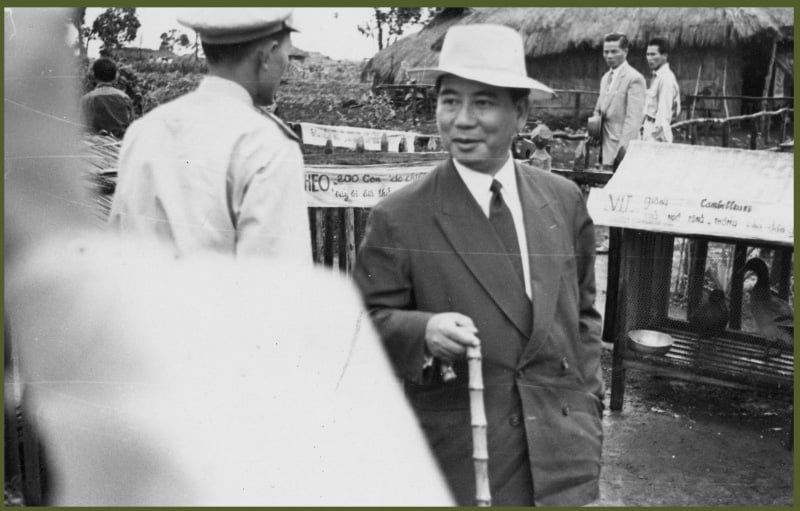
To Vietnam’s Buddhist majority, Diem’s government increasingly appeared to favor Catholics at every level of society. Catholics were appointed to influential positions in government and the military, received preferential treatment in land distribution, and enjoyed privileges denied to others. For the more than ten million Buddhists who made up the vast majority of South Vietnam’s population, resentment steadily grew.
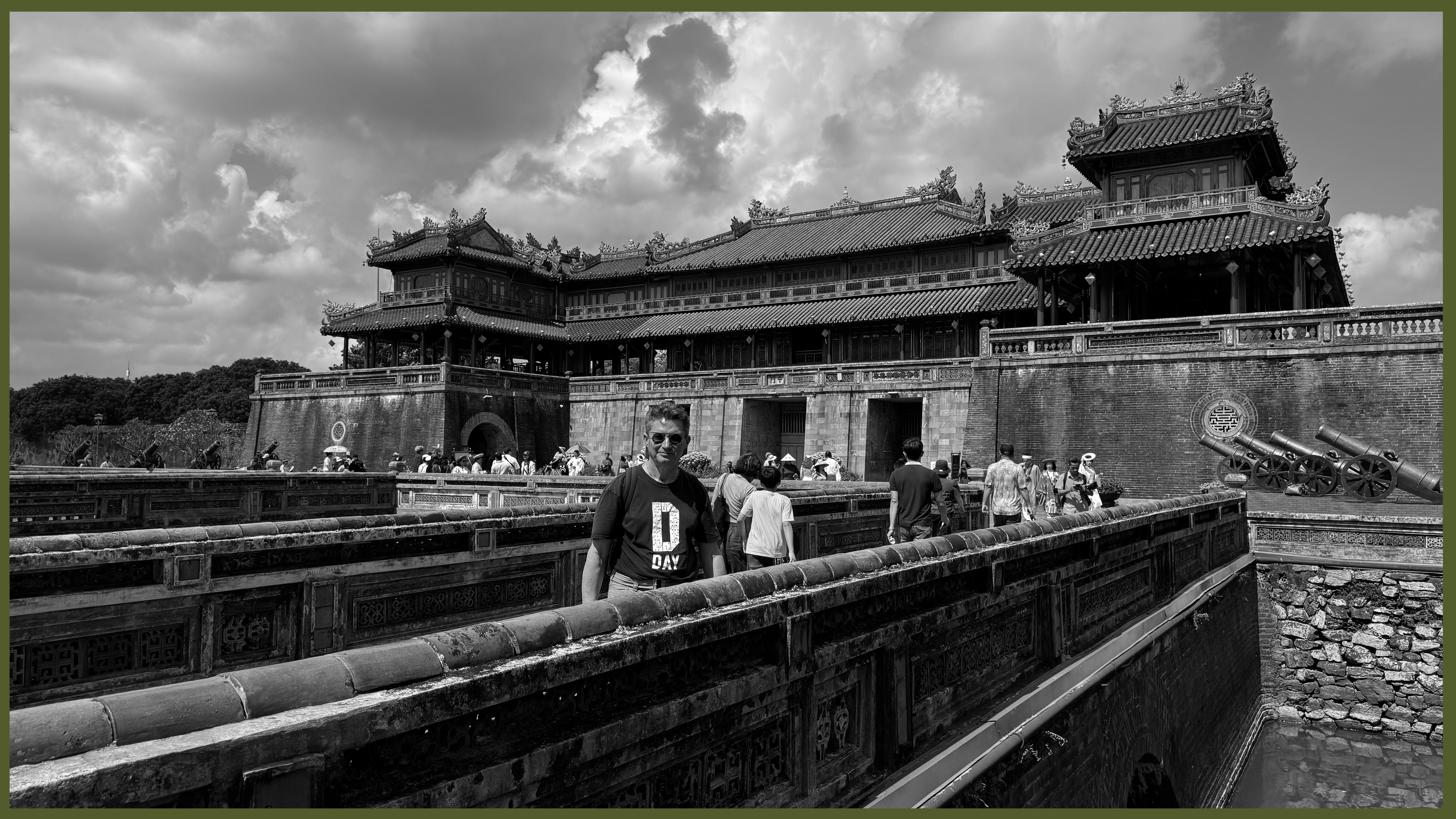
The crisis erupted in Hue, Vietnam’s ancient imperial capital and the spiritual heart of South Vietnamese Buddhism.
Hue, imperial capital with Rudy of Vietnam American Heroes
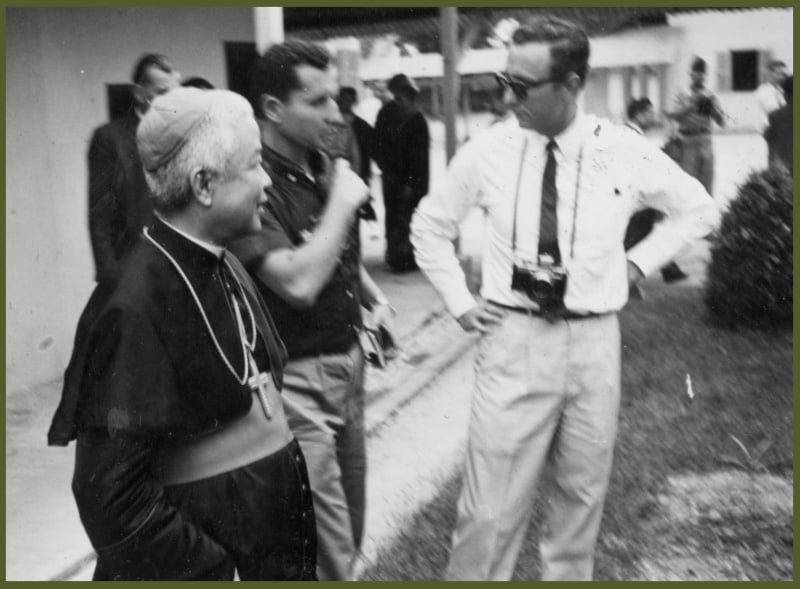
On May 8, 1963, thousands of Buddhists gathered to celebrate the 2,587th birthday of the Buddha. Tensions were already high after local authorities banned the display of the Buddhist flag, despite recently allowing Vatican flags to be flown during celebrations honoring Diem’s brother, Archbishop Ngo Dinh Thuc.
Bishop Ngo Dinh Thuc, the Archbishop of Hue (left), Mr. Sully, and Mr. Griffin standing around on a visit to the Mekong Delta airports
Determined to protest the ban, crowds assembled outside Hue’s radio station to hear a speech by the respected Buddhist leader Thich Tri Quang. The station director refused permission for the broadcast, claiming it lacked official authorization. Soon Major Dang Sy, a Catholic officer and deputy provincial chief, arrived with troops and ordered the crowd to disperse.
The demonstrators refused.
Moments later, gunfire erupted.
In the chaos that followed, fourteen people—including two children—were killed, either by bullets or crushed beneath the panicked crowd. The tragedy sent shockwaves throughout South Vietnam.
Buddhist leaders demanded justice. They called for an end to religious discrimination, compensation for the victims’ families, and punishment for those responsible. Diem rejected their demands. Instead, he blamed the incident on a Viet Cong terrorist and dismissed Buddhist accusations against his government.
His response only fueled public outrage.
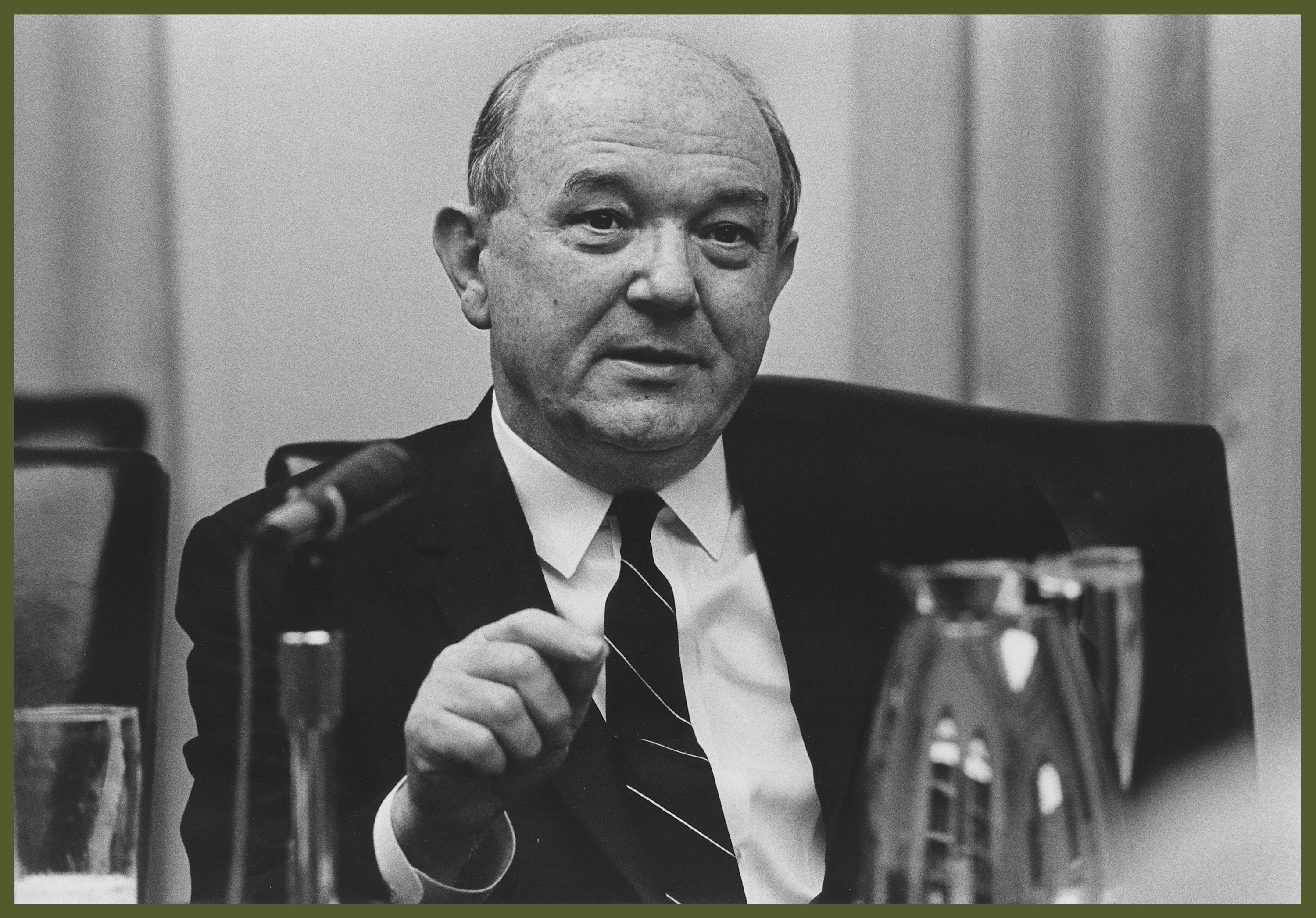
Protests spread across Hue and soon reached Saigon. Demonstrations became a near-daily occurrence. Diem responded with curfews, martial law, and increased repression. In Washington, alarm bells began to ring. Secretary of State Dean Rusk urged the South Vietnamese government to avoid further violence and seek reconciliation. Diem offered assurances but took little meaningful action.
Secretary of State Dean Rusk
The movement continued to grow.
On May 30, hundreds of Buddhist monks staged a peaceful sit-down protest in Saigon. Days later, security forces violently dispersed another demonstration. Yet nothing prepared the world for what happened next.
On June 11, 1963, at a busy Saigon intersection, seventy-three-year-old monk Thich Quang Duc calmly seated himself in the lotus position. As fellow monks looked on, he was doused with gasoline and set himself alight.
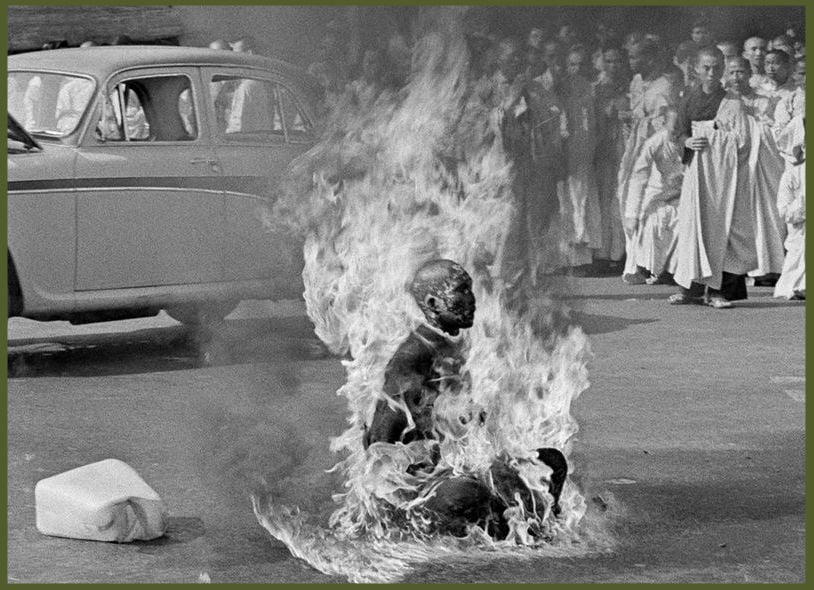
The horrifying image of his self-immolation was captured by photographers and flashed across newspaper front pages around the globe.
The photograph became one of the most powerful images of the twentieth century.
Over the following weeks, six more monks and nuns followed his example. Student activists joined the protests, and the movement gained momentum. International criticism mounted as Diem’s government appeared increasingly isolated and out of touch.
Then, in the early hours of August 21, the crisis reached its climax.
Acting on orders from Diem’s brother and chief adviser, Ngo Dinh Nhu, special security forces disguised as army troops launched coordinated raids against Buddhist pagodas throughout South Vietnam. At Saigon’s Xa Loi Pagoda, the country’s most important Buddhist shrine, police smashed their way inside, vandalized sacred property, and arrested hundreds of monks and nuns.
Ngo Dinh Nhu, 1963 (Credit / source CIA)
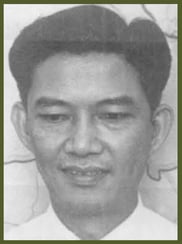
Similar scenes unfolded nationwide. In Hue, monks barricaded themselves inside the Dieu De Temple before finally surrendering after hours of resistance. More than 1,400 religious figures were arrested.
Dieu de Temple, Vietnam American Heroes
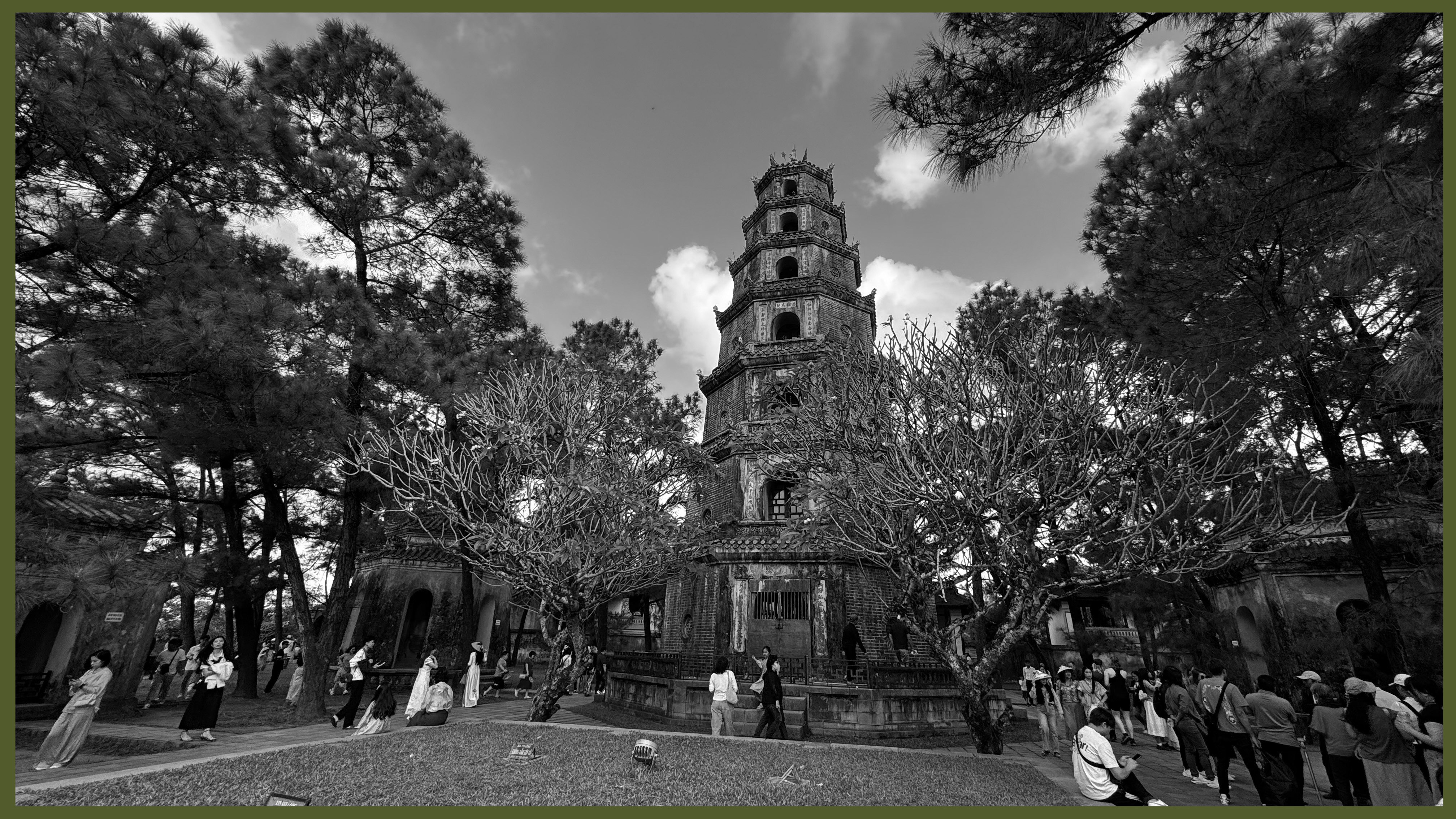
The raids shocked both Vietnam and the United States.
When Henry Cabot Lodge arrived in Saigon as the new American ambassador, he concluded that Diem had become a liability. Confidence in the South Vietnamese president had evaporated. Buddhist leader Thich Tri Quang secretly met with American officials, urging them to recognize their responsibility for supporting a regime that had turned against its own people.
President John F. Kennedy meets with Director General of The Atlantic Institute, Henry Cabot Lodge, Jr. Oval Office, White House, Washington, D.C. 12 December 1961
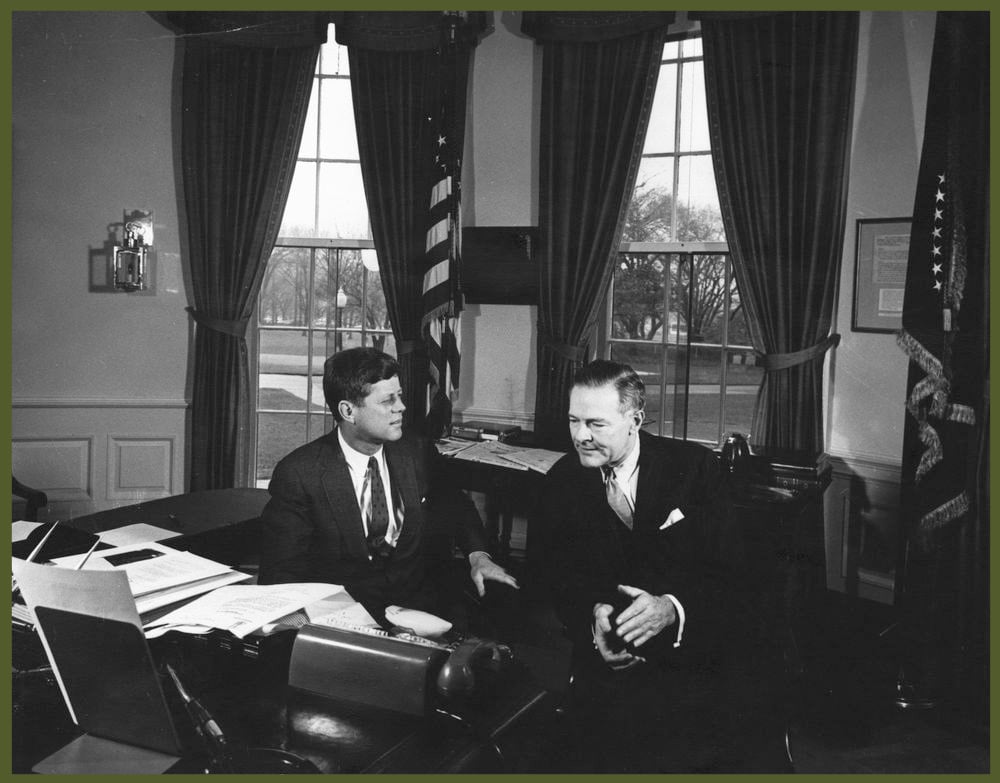
Within the Kennedy administration, attitudes hardened. Many American officials no longer viewed Diem as capable of leading South Vietnam through its growing conflict with the Viet Cong.
The Buddhist Crisis had destroyed whatever trust remained.
As unrest intensified, South Vietnamese generals quietly began plotting a coup. President John F. Kennedy and Ambassador Lodge signaled that while the United States would not actively participate in the overthrow, it would not stand in the way.
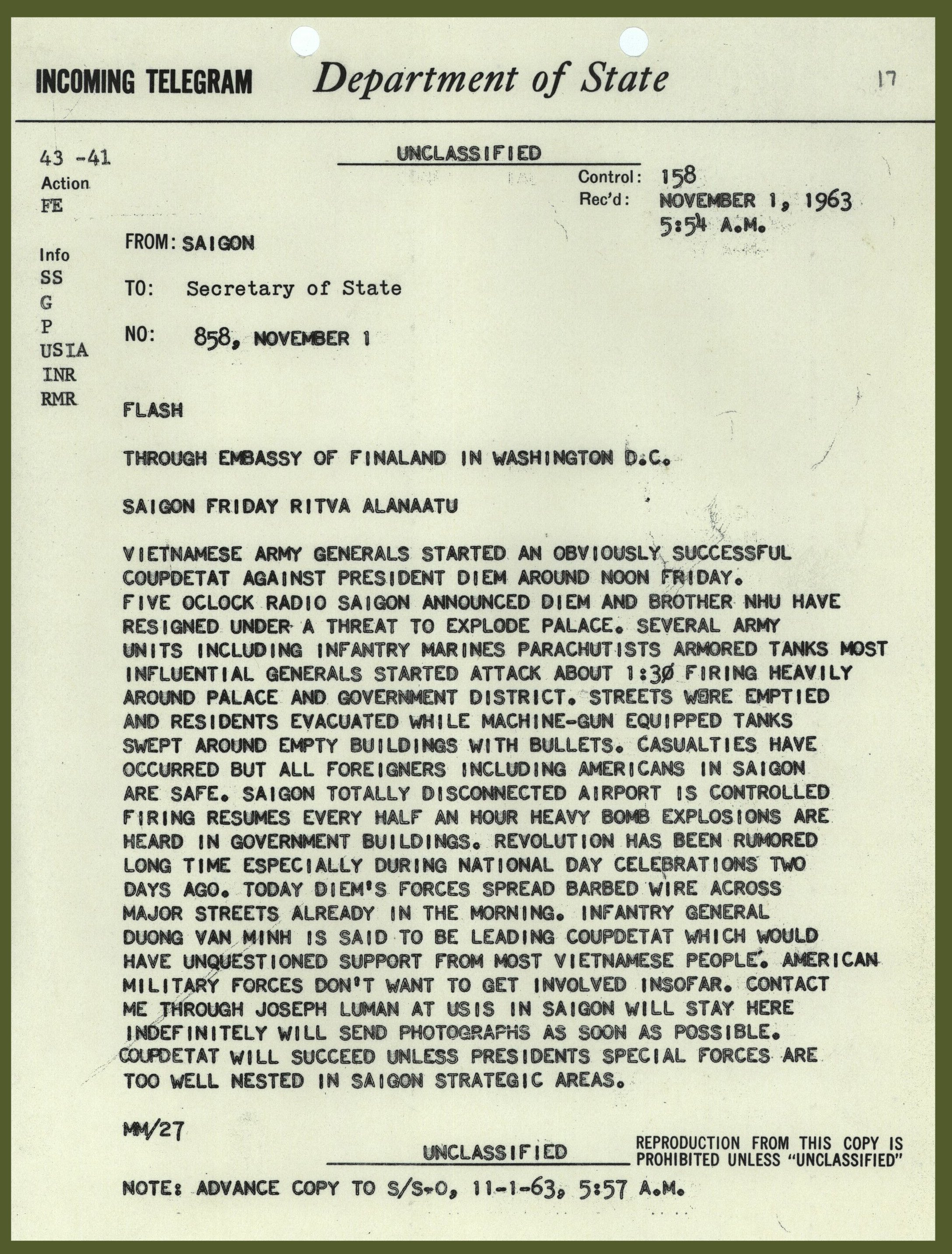
On November 1, 1963, the generals struck.
Within two days, Ngo Dinh Diem and his brother Nhu were captured and killed, bringing an abrupt end to nine years of Diem rule.
Corpse of Ngô Đình Diệm in the 1963 coup
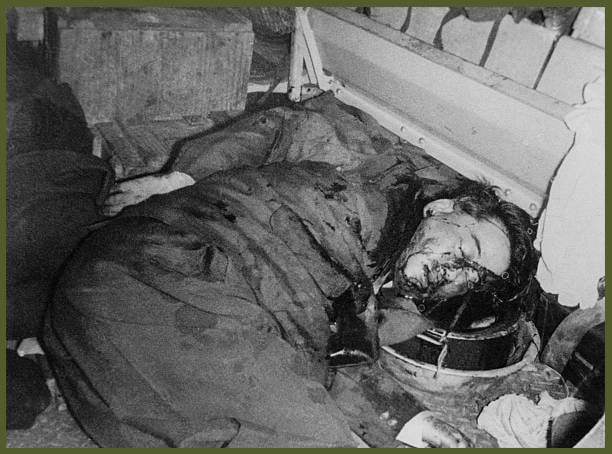
Yet the removal of Diem did not bring stability. Instead, South Vietnam entered a period of chronic political turmoil. One military government followed another, each struggling to establish authority. Amid the confusion, the Viet Cong expanded their influence, exploiting the weakness of the regime they sought to overthrow.
What began as a dispute over religious freedom had evolved into a crisis that toppled a government, reshaped American policy, and accelerated South Vietnam’s slide toward a wider and more devastating war.
Vietnam: General, November 1963: 1-2: State cables (Credit / source JFK Library)