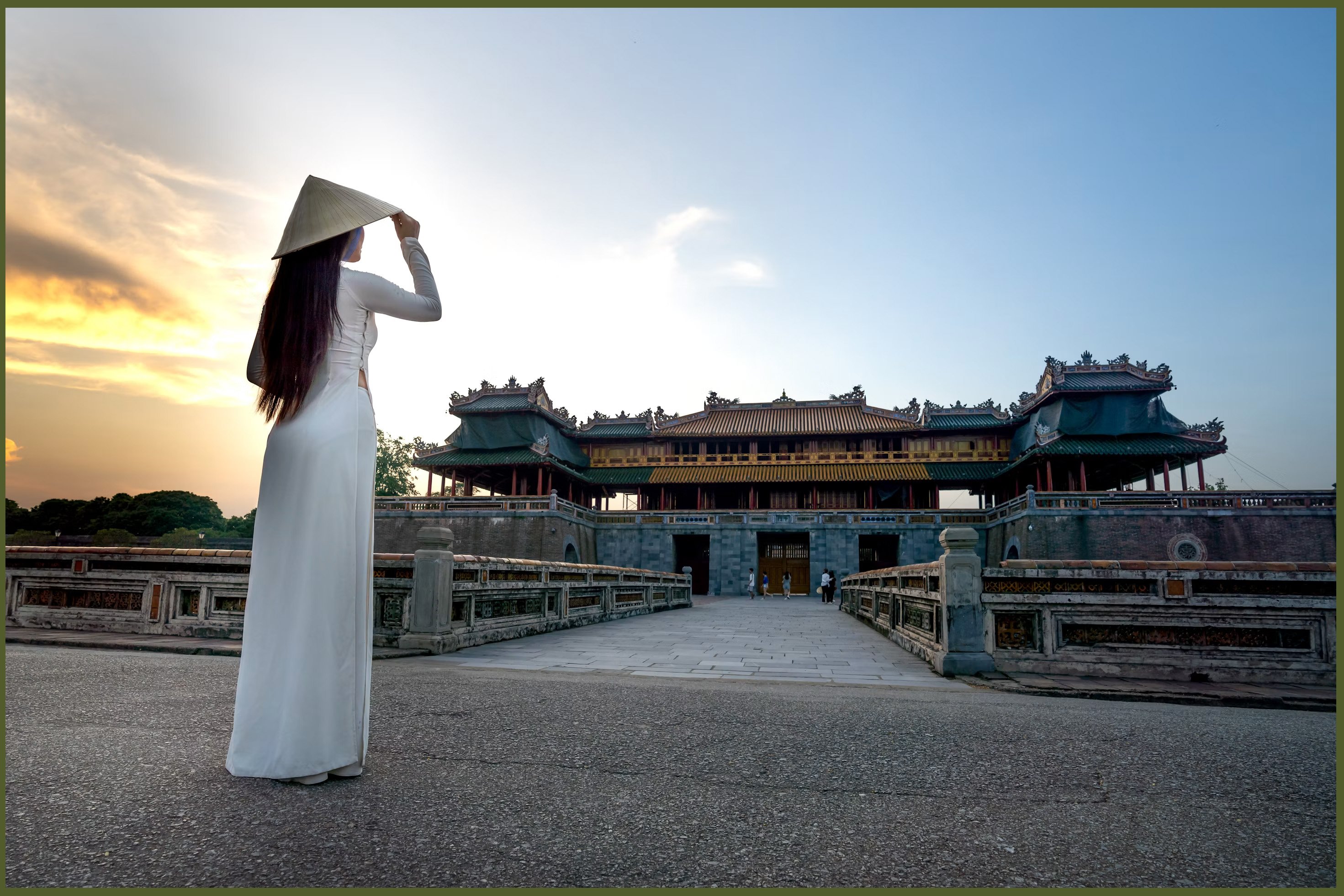











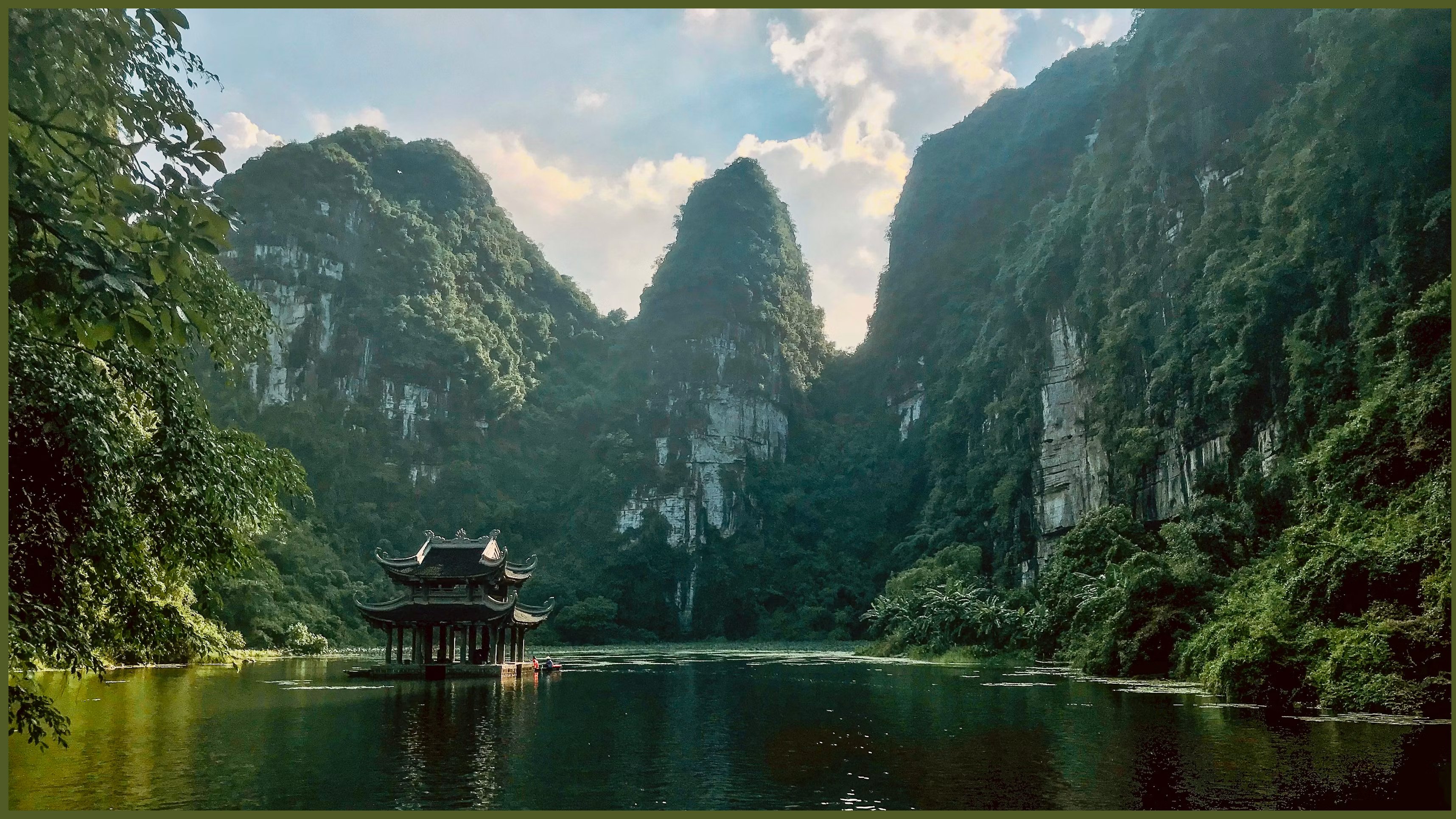
Ninh Binh and Trang An
South of Hanoi, the landscape begins to change.
The straight roads and crowded villages of the Red River Delta gradually give way to a world of water, rice, and stone. Beyond the dikes, limestone mountains rise abruptly from the green paddies—isolated, weathered, and immense.
The Vietnamese call this place “Ha Long Bay on land.”
But the comparison only tells part of the story.
Here, there are no great junks sailing between offshore islands. Instead, narrow rivers thread through rice fields, slip beneath limestone cliffs, and disappear into caves carved by water over millions of years. Small wooden boats move almost silently across the surface, guided by local boatwomen who know every bend, every cavern, and every hidden passage.
This is Ninh Binh.
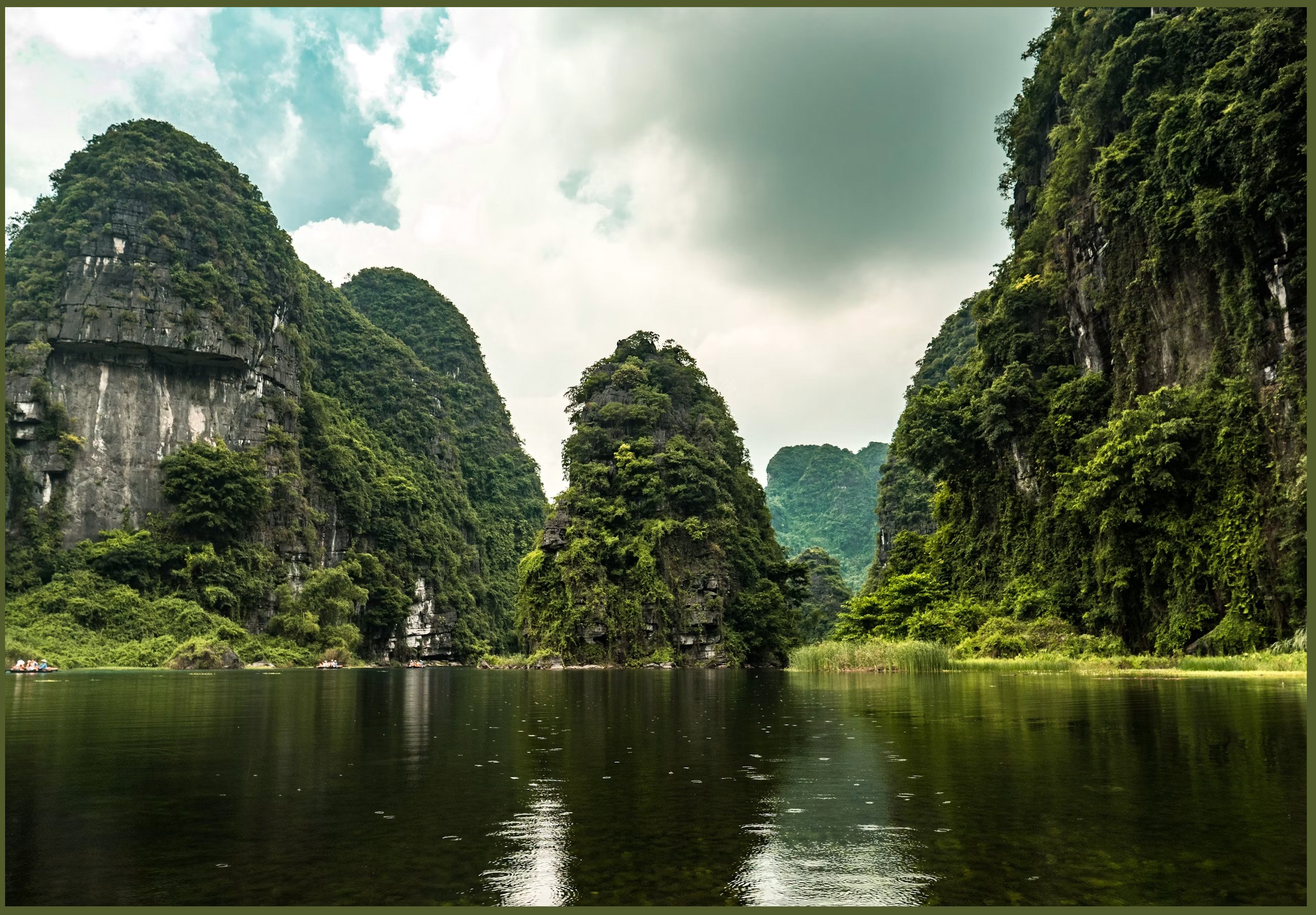
And at its heart lies Trang An, one of the most extraordinary karst landscapes in Asia.
For millions of years, rain and underground rivers have slowly sculpted the limestone plateau into a maze of flooded valleys, sheer cliffs, forests, and caverns. Mountains rise like walls around the waterways. Caves open suddenly in the rock, sometimes so low that passengers must duck as the boat slips into darkness.
Then, almost as suddenly, the darkness gives way to light.
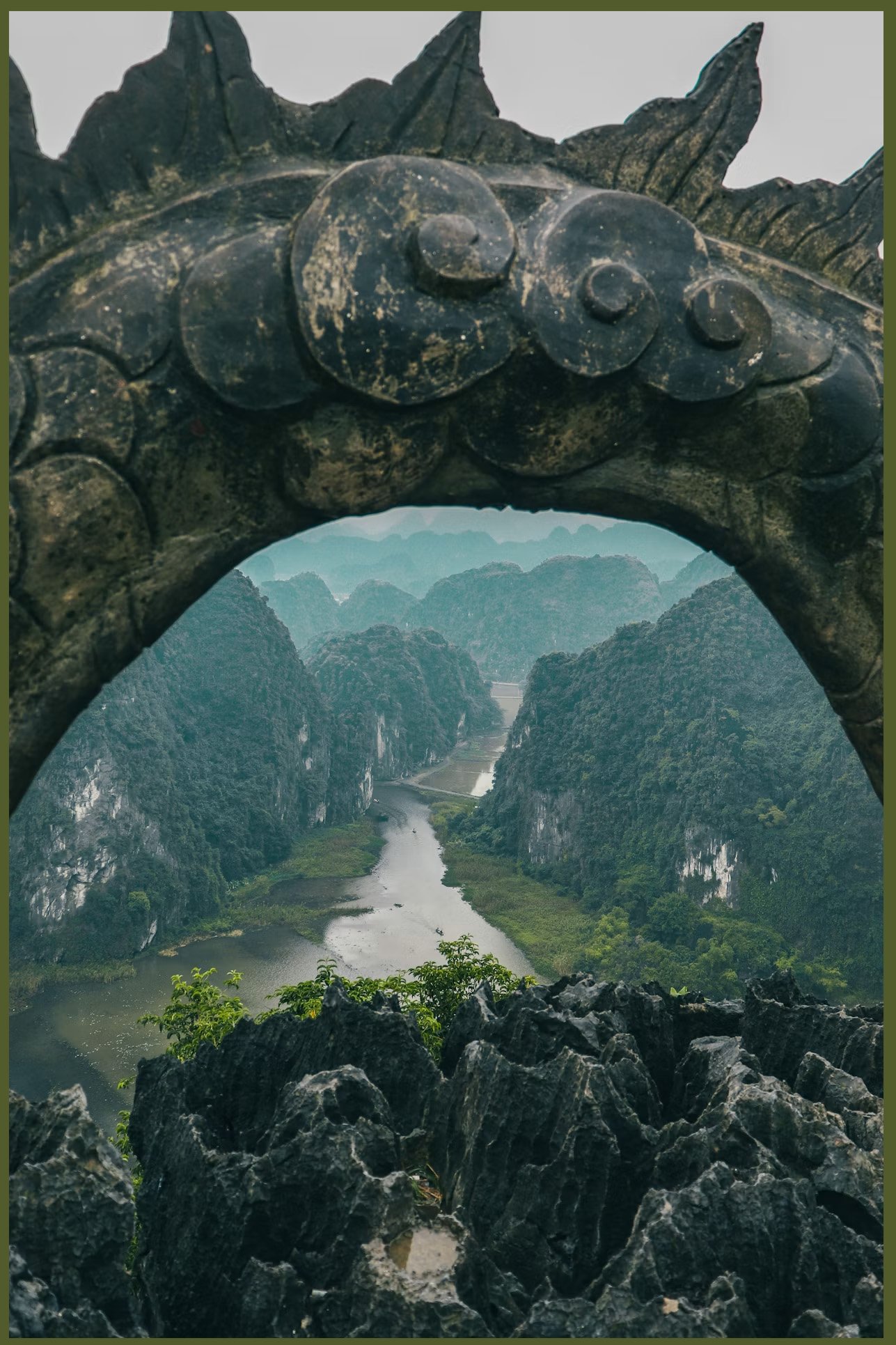
A few hundred meters farther on, the river emerges beneath the cliffs, and the landscape opens once again—green paddies, distant mountains, lotus flowers, and the occasional heron standing motionless above the water.
The journey seems to have no urgency.
And perhaps that is part of its magic.
Everything here appears to slow the pace: the boats, the rivers, the farmers working the fields, even the clouds moving across the mountains.
But this tranquil landscape has not always been peaceful.
More than a thousand years ago, these mountains formed a natural fortress.
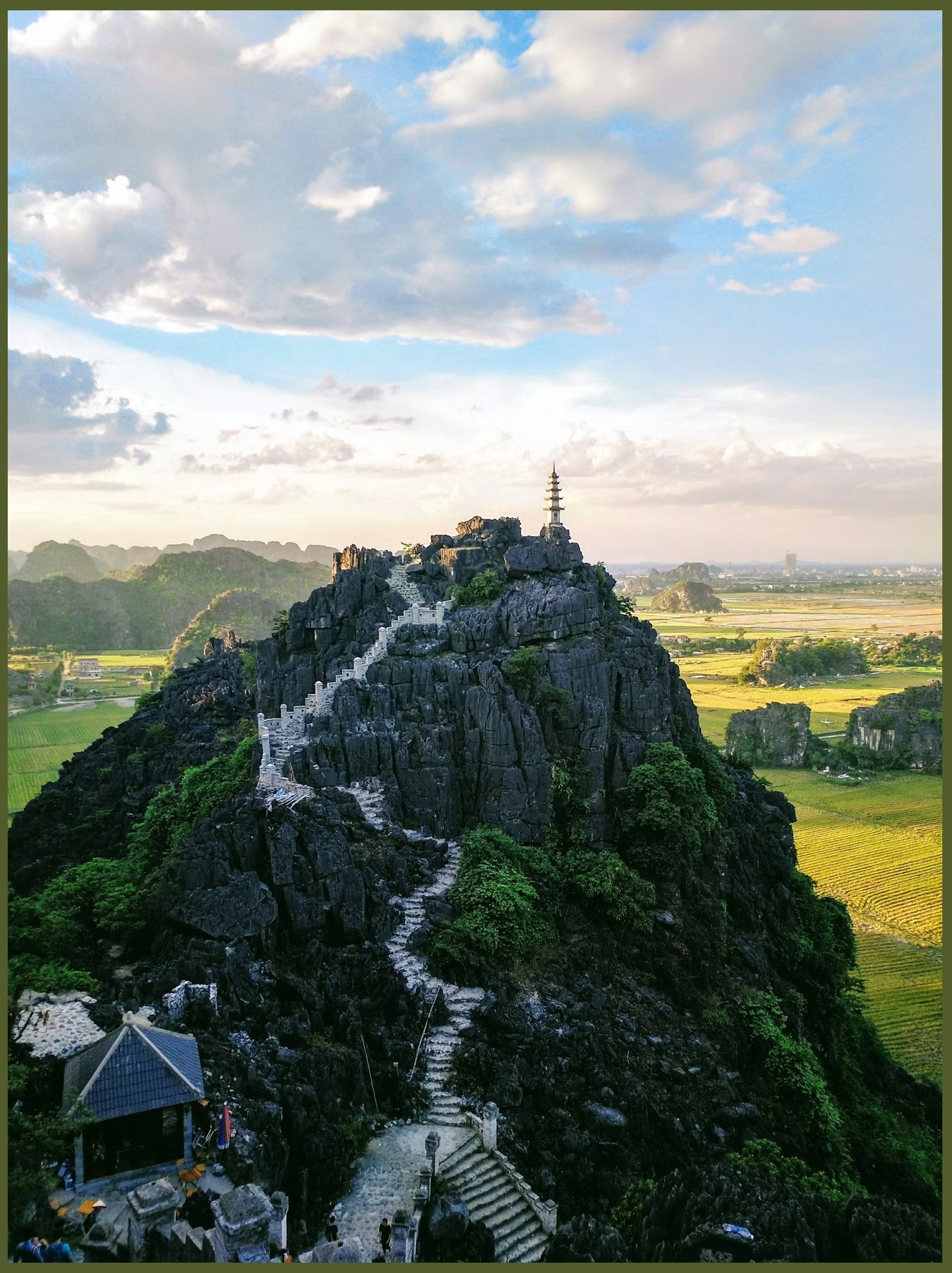
Nearby Hoa Lu became the capital of an independent Vietnam in the 10th century, when the country was emerging from centuries of Chinese domination. Surrounded by limestone peaks, rivers, caves, and narrow valleys, the location offered something no stone wall could provide—a fortress created by nature itself.
Vietnamese rulers understood the terrain.
The mountains concealed armies. The waterways created barriers. The narrow passages could be defended. What today seems like a serene landscape of rice paddies and temples once formed the strategic heart of a young Vietnamese state.
And traces of that history remain everywhere.
Stone gateways stand beneath the cliffs. Ancient temples disappear into the vegetation. Weathered steps climb toward sanctuaries hidden among the mountains.
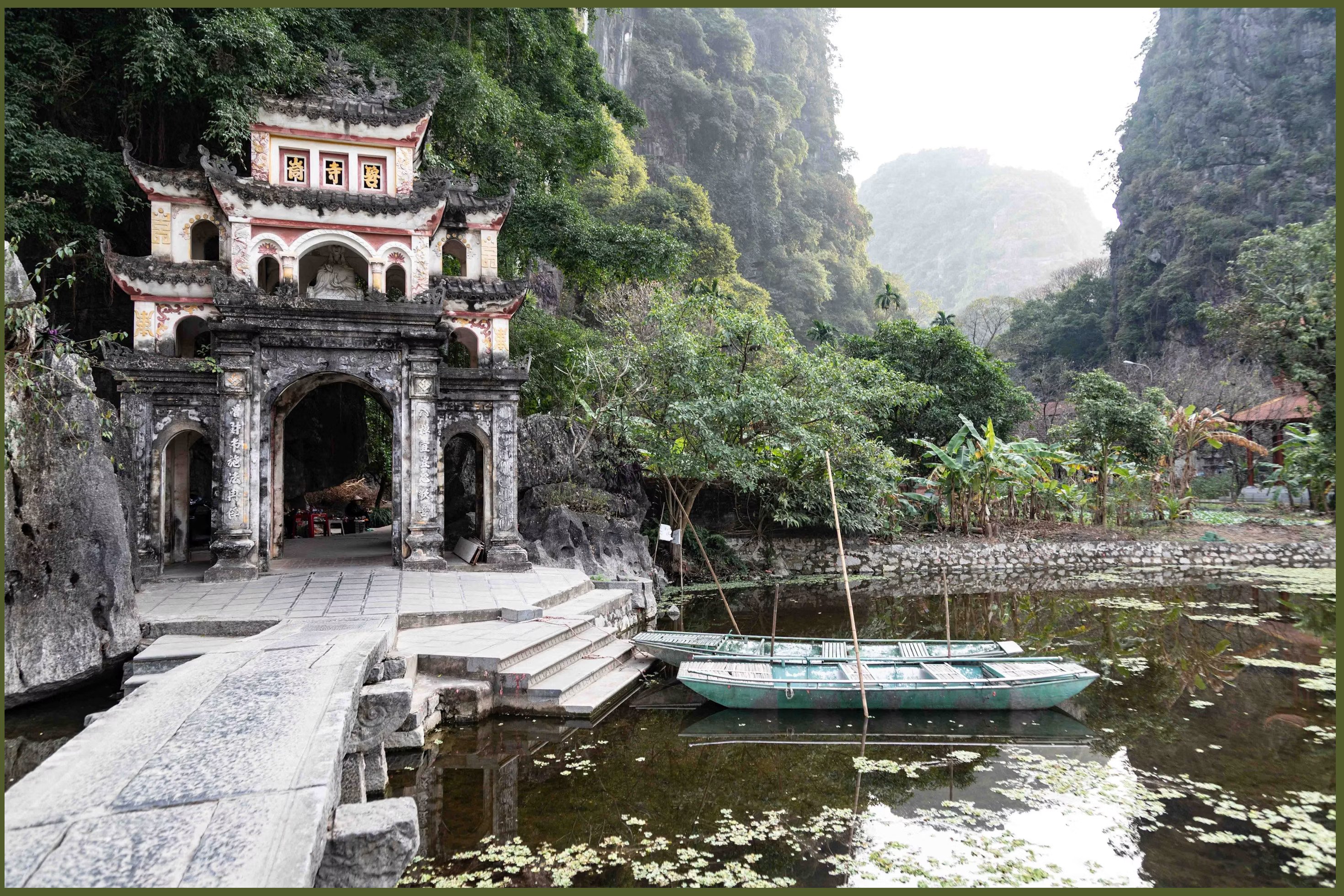
At Bich Dong, the journey itself becomes part of the experience. Stone steps lead upward through the vegetation toward temples built into the limestone, where incense burns quietly before the altars.
Elsewhere, at Bai Dinh, an immense modern Buddhist complex stretches across the landscape, its seemingly endless rows of statues watching over the valleys.
Here, the spiritual world and the natural world seem inseparable.
Pagodas cling to mountainsides. Caves become places of worship. Incense smoke drifts into humid air, while beyond the temple walls, the same rivers continue their ancient journey through the rocks.
Yet perhaps the most remarkable thing about Trang An is not any single temple, mountain, or cave.
It is the balance between them.
The landscape has been shaped by nature for millions of years, but it has also been shaped by generations of Vietnamese life.
The rice paddies change with the seasons.
In spring, they glow with brilliant green. As harvest approaches, the fields turn deep gold beneath the limestone peaks. Water buffalo move slowly along the embankments. Farmers work the paddies. Fishermen disappear into the canals.
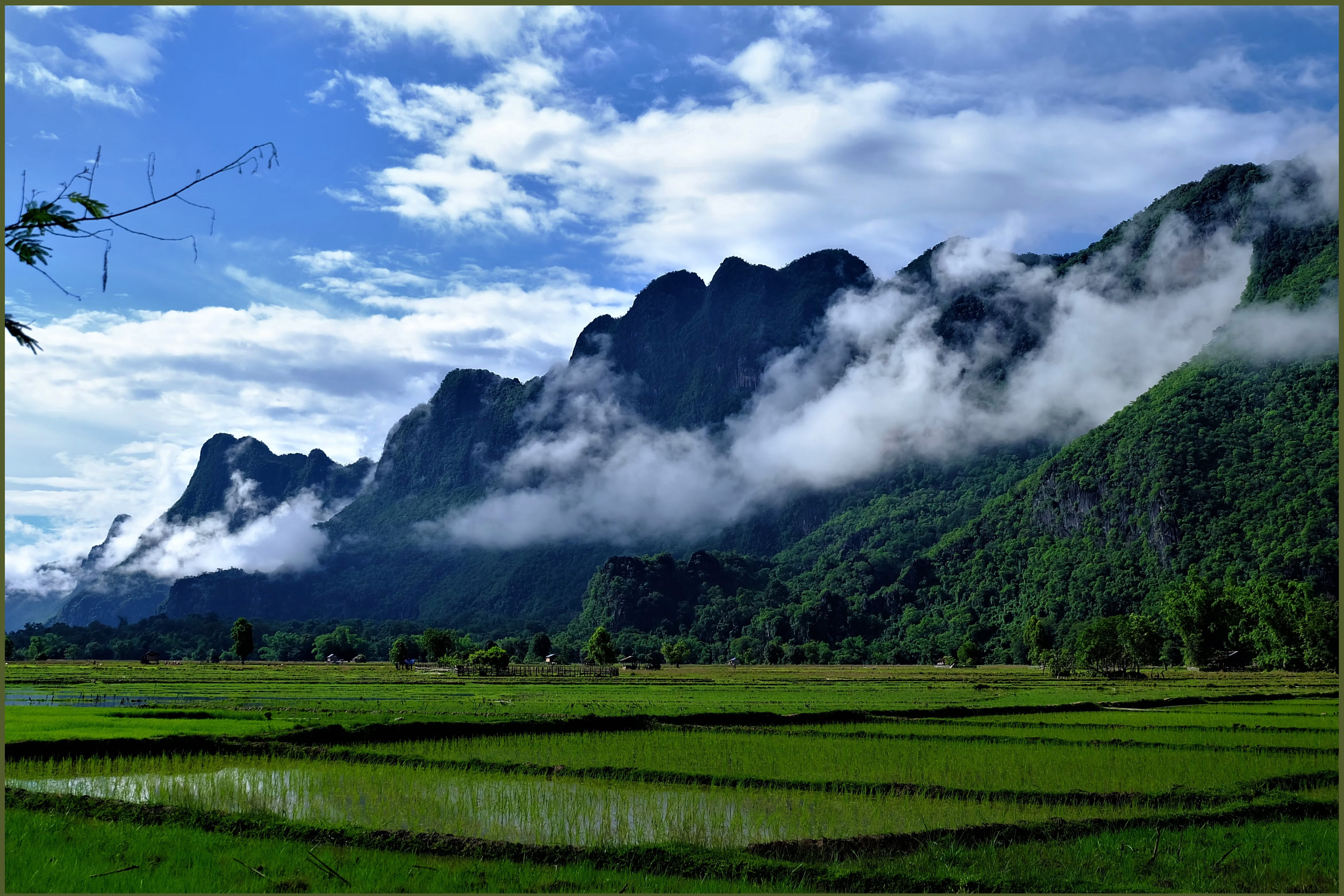
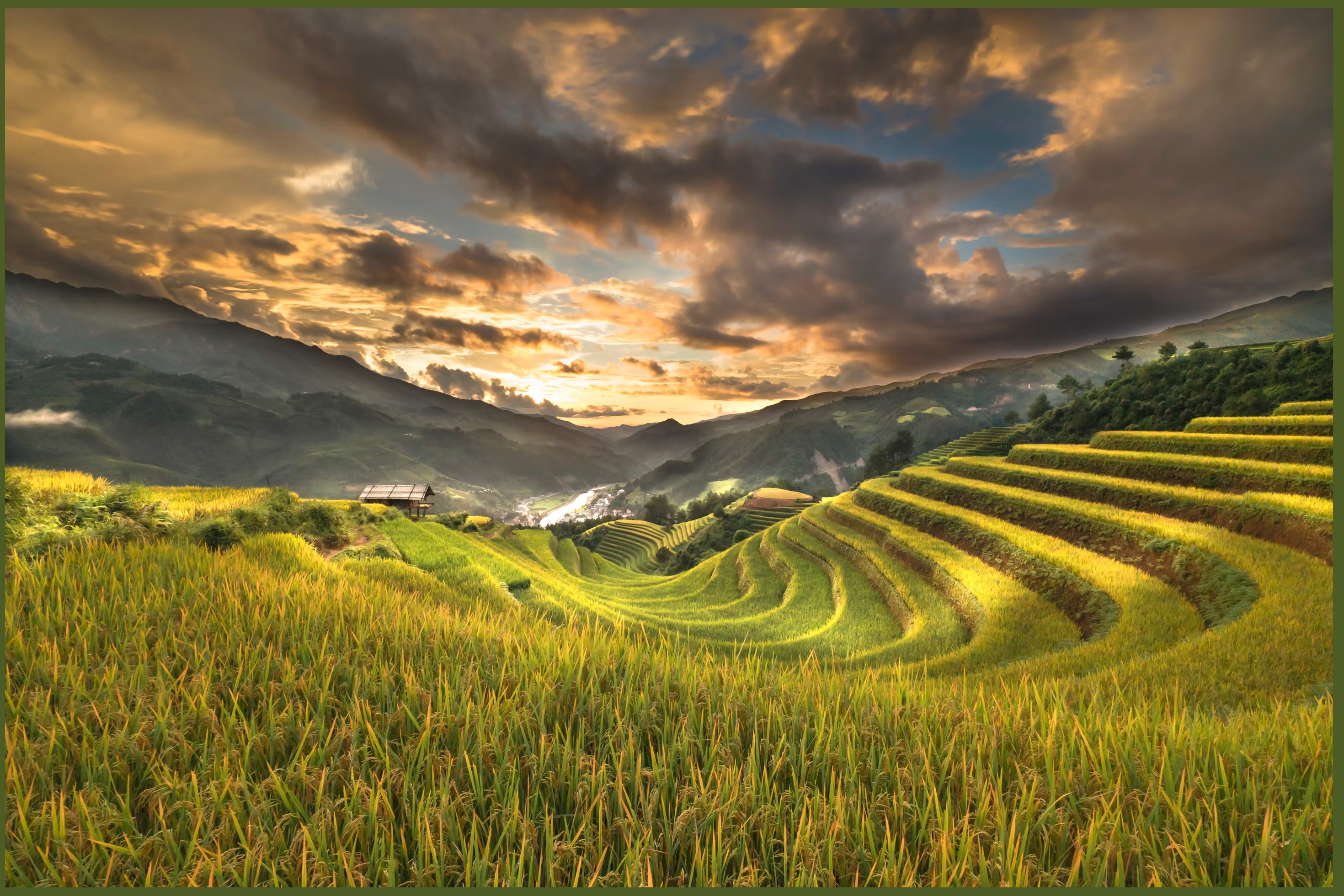
Family tombs stand quietly among the fields, reminders that even in this intensely cultivated landscape, the past is never far away.
And for the guests of Vietnam American Heroes, that is where Ninh Binh becomes more than a beautiful excursion.
Leave the main boat landings behind, and another Vietnam begins to reveal itself.
A Vietnam of narrow paths, village life, ancient tombs, water buffalo, fishermen, and temples hidden beneath the jungle canopy.
It is a landscape that rewards silence.
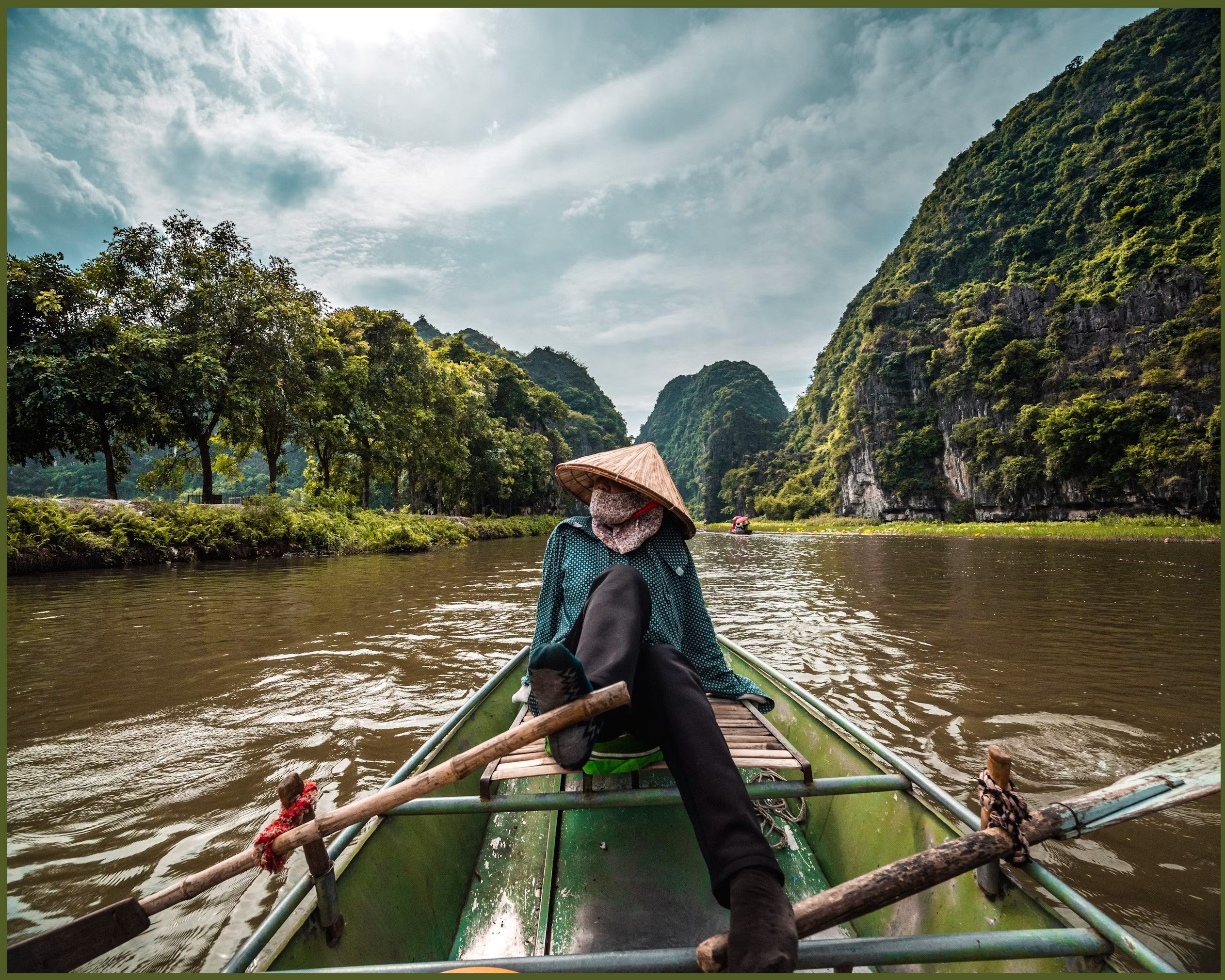
As the boat glides beneath another limestone arch, the voices of the outside world seem to disappear. There is only the sound of the oar touching the water, the echo of the cave, and the mountains rising silently on either side.
For a moment, it is possible to imagine the landscape as it must have appeared centuries ago.
And perhaps that is the lasting impression of Ninh Binh.
Not simply that it is beautiful—but that its history remains written into the land.
The mountains are not merely scenery.
They are the fortress.
The rivers are not merely waterways.
They are ancient corridors.
The temples are not isolated monuments.
They are part of a spiritual landscape that has grown alongside the villages, rice fields, and waterways for generations.
Here, the mountains never dominate the plains. They frame them.
Stone rises from water. Rice stretches toward the cliffs. Temples disappear into forests. And life continues at the same measured pace it has followed for centuries.
For guests of Vietnam American Heroes, leaving Ninh Binh can feel almost like leaving another time.
A place where nature and history have become inseparable—and where, for a few unforgettable hours, the ancient landscape seems to breathe beneath the passing boat.