


The story of Indochina is one of colonial domination, nationalist resistance, and Cold War rivalry. What began as a struggle for independence against French colonial rule, eventually became part of a global ideological conflict between communism and the West. At the heart of this transformation was Vietnam, whose fight for freedom would ultimately reshape Southeast Asia and set the stage for one of the most significant conflicts of the twentieth century.
The Birth of French Indochina
During the nineteenth century, France expanded its colonial empire into Southeast Asia, conquering Vietnam, Cambodia, and Laos. These territories were combined into a single colonial entity known as French Indochina. Vietnam itself was divided into three regions—Tonkin in the north, Annam in the center, and Cochinchina in the south.
French rule brought economic exploitation and political repression. Nationalist movements emerged throughout the country, but the colonial authorities ruthlessly suppressed revolts and maintained firm control for decades. This dominance continued until World War II, when Japanese forces occupied Indochina, weakening French authority and fueling demands for independence.
Ho Chi Minh and the Quest for Independence
As World War II came to an end, Vietnamese nationalism reached a turning point. In September 1945, Ho Chi Minh, leader of the Viet Minh independence movement, proclaimed the independence of Vietnam. He established a government that enjoyed widespread popular support and declared:
"Nothing is more precious than independence and liberty."
For many Vietnamese, this marked the beginning of a new era. However, France was unwilling to surrender one of its most valuable colonies. Determined to restore colonial control, French forces returned, and war soon broke out between the French Expeditionary Force and the Viet Minh.
.jpg?width=271&height=362&name=Ho%20Chi%20Minh%20(1946).jpg)
Ho Chi Minh, 1946
The First Indochina War
The First Indochina War, fought from 1946 to 1954, was a brutal conflict characterized by guerrilla warfare and attrition. The Viet Minh, operating from rural strongholds, launched attacks against French positions and supply lines. Although the French maintained control of major cities, they struggled to secure the countryside, where the Viet Minh enjoyed strong local support.
As the conflict intensified, it became increasingly clear that this was more than a colonial war. The world was entering the Cold War, and both sides found themselves caught in a larger ideological struggle.
The Cold War Changes Everything
By the late 1940s, the United States had adopted a policy of containing communism around the world. In 1947, President Harry Truman announced what became known as the Truman Doctrine, pledging American support for nations threatened by communist expansion.
Events such as the communist takeover of Czechoslovakia and the Soviet blockade of Berlin heightened fears in Washington. As a result, the conflict in Vietnam was no longer viewed simply as a colonial rebellion. Instead, it became part of the broader Cold War confrontation between the communist and capitalist worlds.
American financial and military assistance to France increased significantly, as policymakers feared that a communist victory in Vietnam could encourage similar movements elsewhere in Asia.
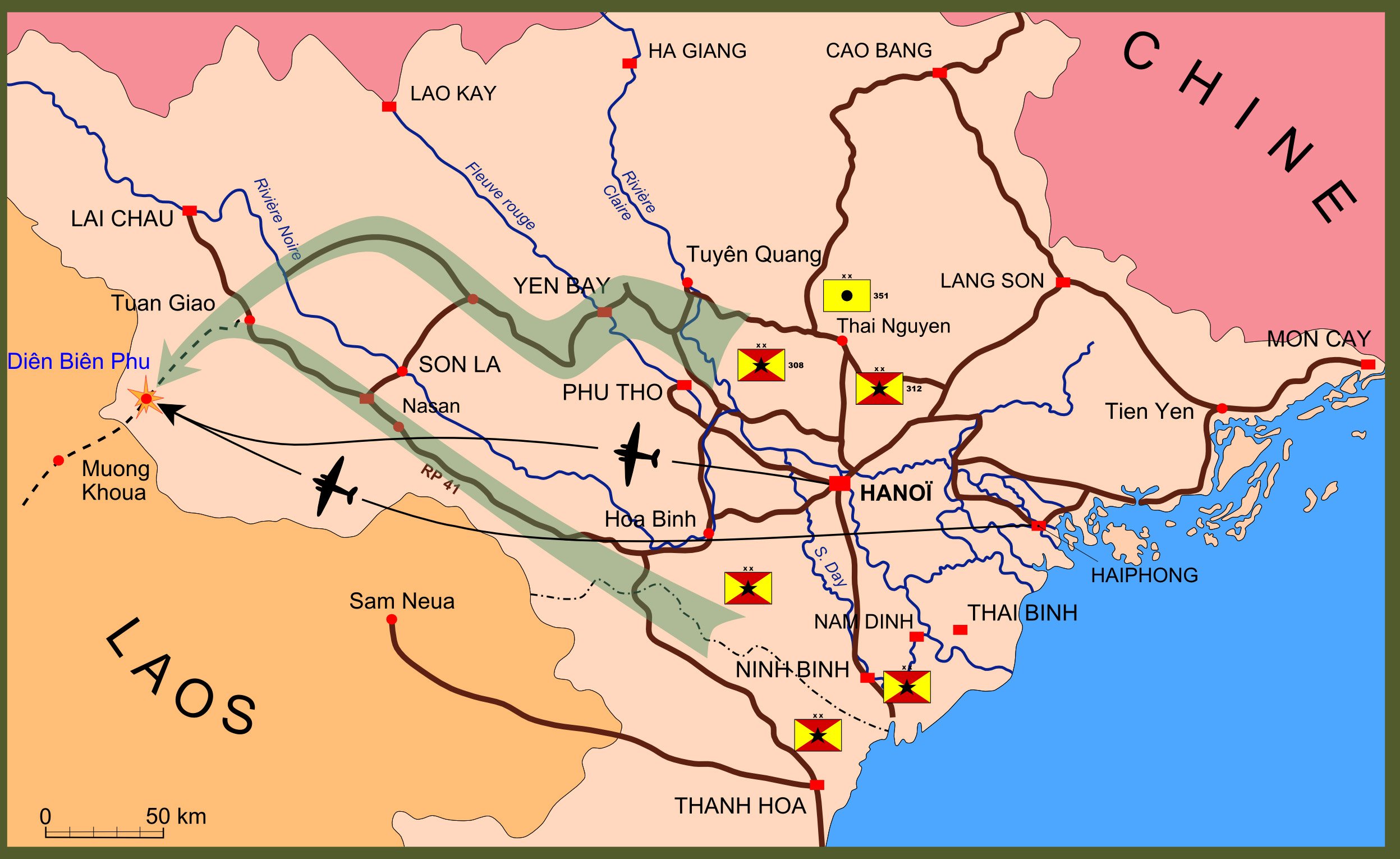
Dien Bien Phu in Vietnam, showing the French air supply routes as well as the approach and supply routes of the Việt Minh
The Road to Dien Bien Phu
In 1953, French General Henri Navarre devised a bold strategy to force the Viet Minh into a decisive battle. He established a heavily fortified base at Dien Bien Phu, a remote valley near the Laotian border deep inside territory controlled by the Viet Minh.
Navarre believed the base would disrupt enemy supply routes and draw the Viet Minh into open combat, where superior French firepower could secure victory. On November 20, 1953, French paratroopers captured the area and began constructing defenses.
However, Viet Minh commander Vo Nguyen Giap had different plans.
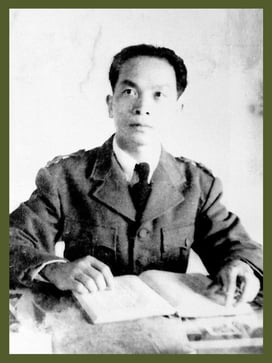
Viet Minh commander Vo Nguyen Giap
Determined to shift from guerrilla warfare to conventional battle, Giap mobilized tens of thousands of troops and an enormous labor force. Supplies, artillery, and ammunition were transported through difficult terrain, often by hand or bicycle. The French underestimated both the determination and logistical capabilities of their opponent.
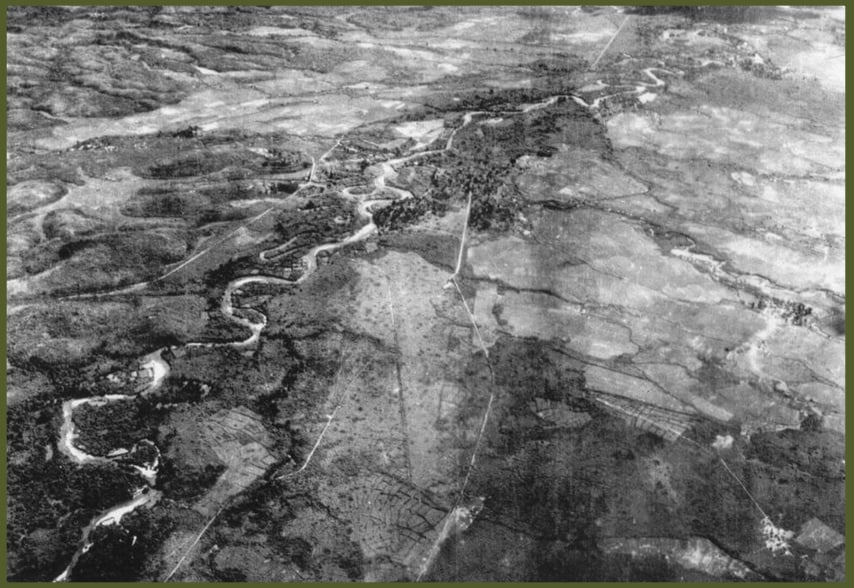
Aerial view of the Dien Bien Phu valley in 1953
The Battle of Dien Bien Phu
The French base occupied a valley surrounded by hills. While French troops dug trenches and fortified positions around their airstrip, Viet Minh forces seized the surrounding high ground and installed powerful Chinese-supplied artillery and anti-aircraft weapons.
By February 1954, French aircraft attempting to resupply the base faced heavy fire. On March 13, the Viet Minh launched a massive assault.
At the time, approximately 11,000 French troops defended the fortress under Colonel Christian de Castries. They included elite paratroopers, Foreign Legion soldiers, North African colonial troops, and members of the Vietnamese National Army. Facing them were nearly 50,000 Viet Minh soldiers supported by heavy artillery.
The initial attacks quickly overwhelmed two key French positions, known as Beatrice and Gabrielle. The intensity of the artillery bombardment shocked the defenders, whose own guns proved largely ineffective.
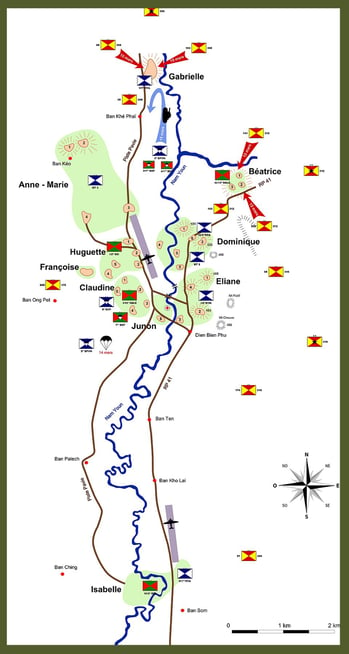
First wave of Viet Minh attack on the northern positions
Within days, the airstrip became unusable, forcing all supplies to be dropped by parachute. Conditions deteriorated rapidly as ammunition dwindled and casualties mounted.
A Desperate Situation
As the crisis deepened, France appealed to the United States for direct military assistance. Plans were considered for American B-29 bombers to strike Viet Minh positions, and discussions even touched on the possible use of atomic weapons.
Ultimately, President Dwight D. Eisenhower rejected intervention. The United States chose not to enter the war directly, although civilian American pilots continued to assist transport operations.
Meanwhile, the Viet Minh tightened their grip around the French fortress. Employing classic siege tactics, they dug an extensive network of trenches ever closer to French positions. Gradually, they reduced the defenders' ability to resist.
The Fall of the Fortress
On May 1, 1954, Giap launched his final offensive. After days of fierce combat, the exhausted French defenders could no longer hold their positions.
On May 7, Dien Bien Phu fell.
The battle had lasted nearly eight weeks. Approximately 2,000 French soldiers were killed, while Viet Minh losses were estimated at around 8,000 dead and many more wounded. Despite the heavy cost, the victory was decisive.
Around 10,000 French soldiers were captured. Tragically, only about one-third survived captivity.
More importantly, the defeat shattered France's determination to maintain its colonial empire in Indochina.
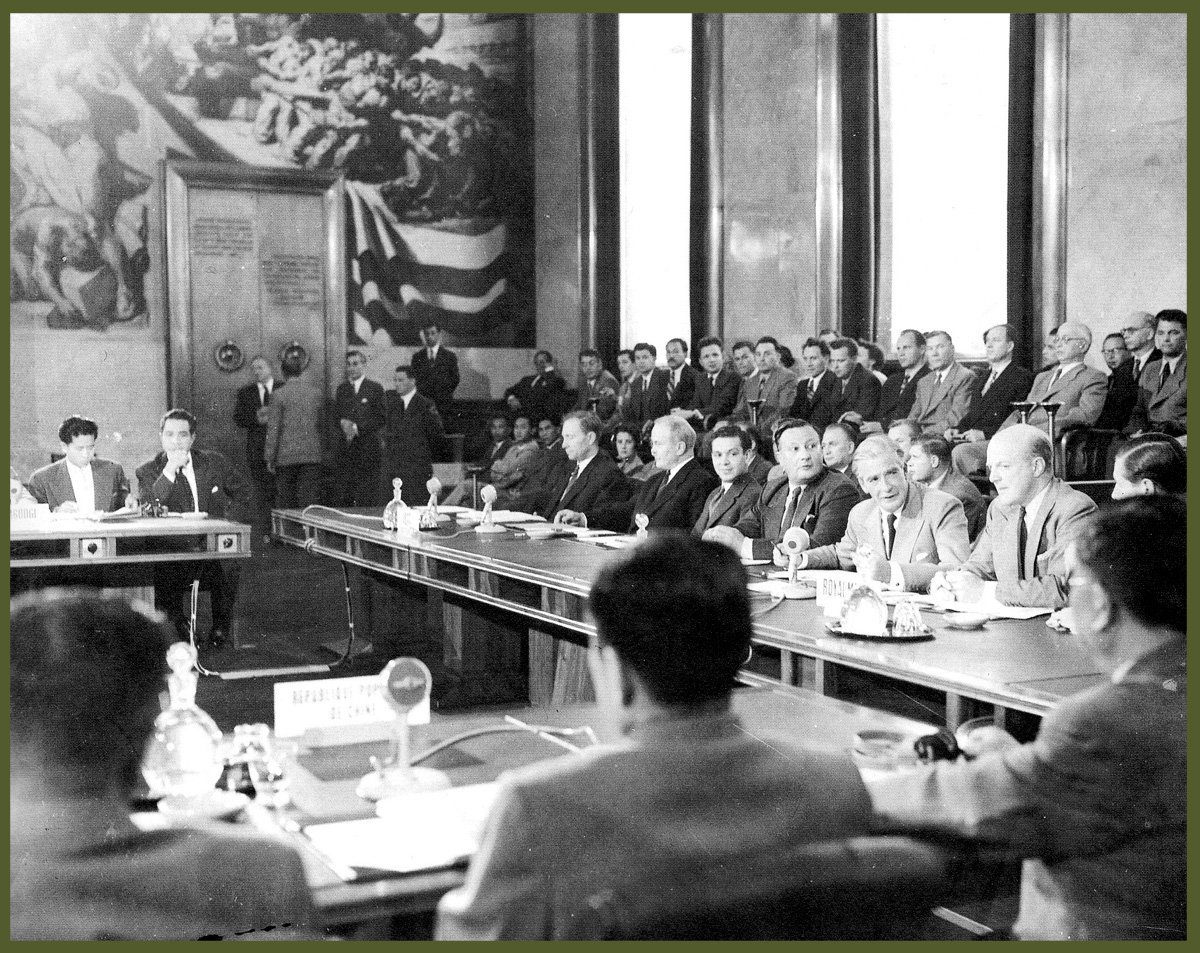
Geneva Conference, 21 July 1954
The Geneva Accords and the Division of Vietnam
The day after the fall of Dien Bien Phu, international diplomats gathered at the Geneva Conference to address the future of Indochina.
The resulting Geneva Accords brought an end to French involvement in Vietnam. The country was temporarily divided along the 17th parallel, separated by a Demilitarized Zone (DMZ).
In the north, Ho Chi Minh established a communist government based in Hanoi. In the south, Ngo Dinh Diem, supported by the United States, emerged as president after defeating Bao Dai in a government-controlled referendum in 1955.
The agreement called for nationwide elections within two years to reunify the country democratically. However, those elections never took place.
%20greet%20South%20Vietnamese%20President%20Ngo%20Dinh%20Diem%20at%20Washington%20National%20Airport.jpg?width=1920&height=1528&name=US%20President%20Dwight%20D.%20Eisenhower%20and%20Secretary%20of%20State%20John%20Foster%20Dulles%20(from%20left)%20greet%20South%20Vietnamese%20President%20Ngo%20Dinh%20Diem%20at%20Washington%20National%20Airport.jpg)
US President Dwight D. Eisenhower welcomes Ngo Dinh Diem at Washington National Airport
Legacy
The First Indochina War ended French colonial rule in Vietnam, but it did not bring lasting peace. Instead, the division of Vietnam created a political and ideological divide that would deepen over the following years.
What began as a struggle for national independence evolved into a larger Cold War conflict, eventually leading to the Vietnam War. The events in Indochina demonstrated how decolonization and global superpower rivalry became intertwined, shaping the course of modern history and leaving a lasting impact on Southeast Asia and the world.
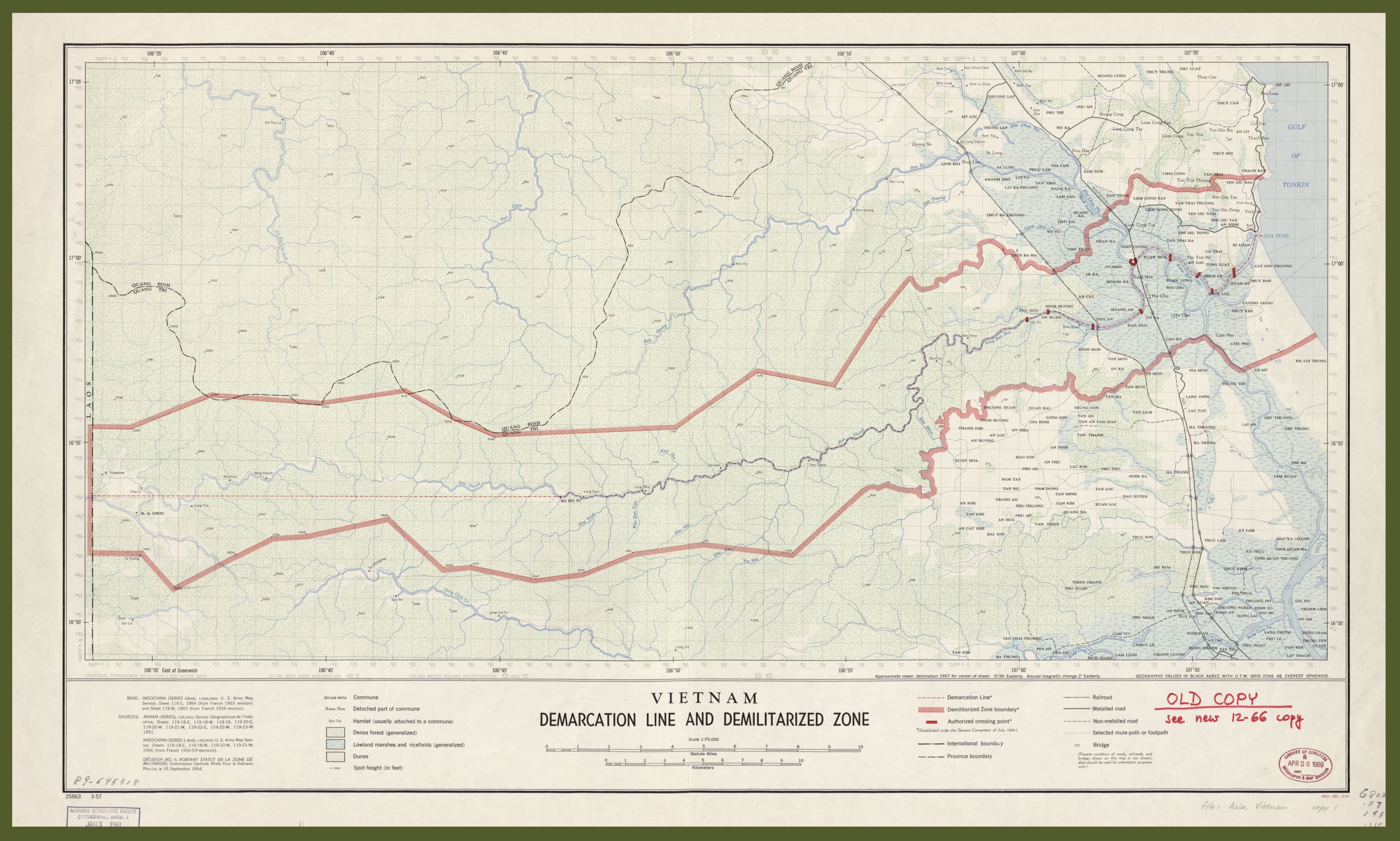
Map of the DMZ as of 1957